
Consumer Reports on Health – April 2026
Summary
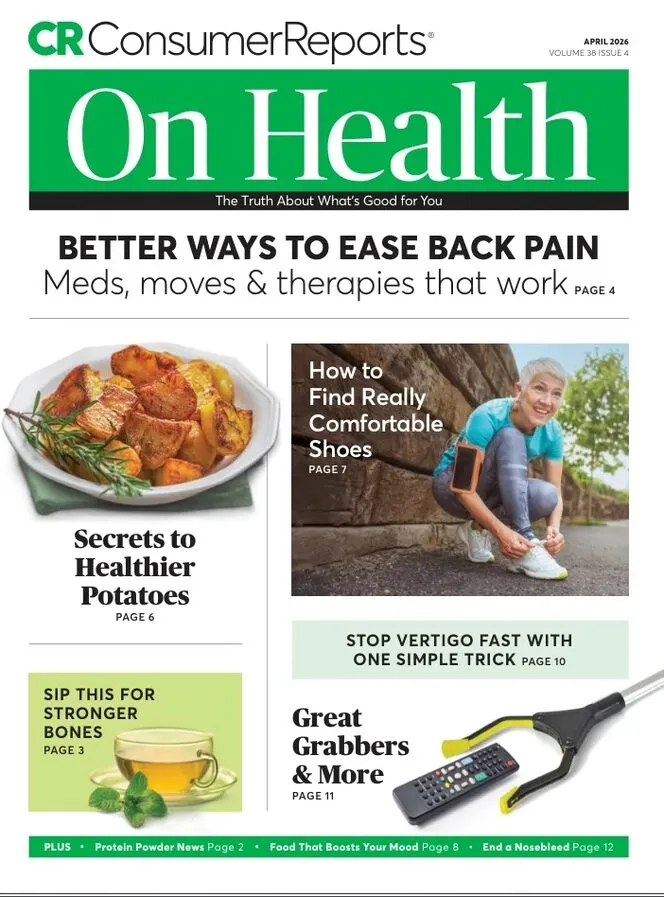
Movement, cognitive behavioural therapy, and acupuncture outperform painkillers for chronic back pain relief, reports the April 2026 Consumer Reports On Health (Volume 38, Issue 4), which also covers protein powder lead contamination, healthier potato secrets, comfortable shoe shopping, vertigo relief, and bone-strengthening beverages.
The back pain feature is the standout: CR reviews evidence that exercise therapy, CBT-I for pain-related insomnia, and acupuncture provide durable relief without opioid risks. A protein powder investigation reveals CR's lab tests detected lead in several popular brands, with a call for FDA to set mandatory limits. The potato article reclaims the humble spud — CR shows that boiling and cooling potatoes creates resistant starch, lowering glycemic impact. The shoe guide helps readers find comfortable, supportive footwear for arthritis, neuropathy, and flat feet.
Health Wire covers new research on diet and mood, foods that support bone density, and a simple vertigo manoeuvre. CR's independent lab testing underpins every product mention, from walking shoes to protein powders.
—————
Content Guide
▸ Cover Feature / Pain Management
p.4 · Better Ways to Ease Back Pain: Meds, Moves & Therapies That Work
CR reviews evidence-based treatments: exercise therapy (specific core-strengthening and flexibility moves), CBT for pain-related insomnia and catastrophizing, and acupuncture. The article warns that opioid prescriptions for back pain are rarely more effective than NSAIDs and carry addiction risk. For acute flare-ups, heat therapy and OTC NSAIDs work; for chronic pain, movement is medicine. Start with 10-minute daily walks and progress to 30 minutes of mixed cardio and strength work.
▸ Health / Food Safety
p.6 · Protein Powder Lead Contamination
CR's lab tests detected lead in several popular protein powders, with some exceeding California's Proposition 65 limits. The article calls for FDA to set mandatory heavy metal limits. Safer choices: plant-based protein powders tested lower on average than whey-based; choose brands that third-party test and publish results. Whole food protein sources (eggs, Greek yogurt, chicken, fish) avoid this risk entirely.
▸ Nutrition / Potatoes
p.6 · Secrets to Healthier Potatoes
Potatoes have a reputation as unhealthy, but CR explains that the preparation method matters: boiling and then cooling potatoes creates resistant starch, which feeds gut bacteria and lowers blood sugar impact. Leave the skin on for fibre, avoid deep frying, and pair potatoes with protein and vegetables. A medium baked potato with skin has 161 calories, 4 grams of fibre, and more potassium than a banana.
▸ Health / Footwear
p.7 · How to Find Really Comfortable Shoes
CR provides a fit guide for older adults: shop in the afternoon when feet swell, measure both feet (one is often larger), look for removable insoles to accommodate orthotics, choose shoes with wide toe boxes and firm heel counters. The article recommends specific brands tested for arthritis, neuropathy, and plantar fasciitis. Replace walking shoes every 300-500 miles.
▸ Health / Vertigo
p.10 · Stop Vertigo Fast With One Simple Trick
CR describes the Epley manoeuvre for benign paroxysmal positional vertigo (BPPV): a sequence of head and body positions performed lying down that moves displaced calcium crystals out of the inner ear canal. The article includes step-by-step instructions and advises seeing a physical therapist if symptoms persist. Not all vertigo is BPPV — see a doctor if you have hearing loss or neurological symptoms.
▸ Nutrition / Bone Health
p.3 · Sip This for Stronger Bones
CR identifies drinks that support bone density: milk (fortified with vitamin D), calcium-fortified plant milks (soy, almond, oat), and bone broth. The article also covers vitamin K2's emerging role in bone health and warns against excessive caffeine and soda consumption, which may interfere with calcium absorption. Aim for 1,200 mg of calcium daily from food sources for adults over 70.
▸ Regulars / Health Wire
Research round-up: a Mediterranean diet is linked to lower depression risk in a 10-year cohort study; strength training twice weekly preserves hip bone density in postmenopausal women; and a 2025 trial found that mindfulness meditation reduces pain perception as effectively as standard pain relief for chronic low back pain patients.
—————
Editor's Take
April 2026 is the most investigative issue of this CRH batch. The back pain feature takes a strong stance — movement over meds — that counters the prevailing prescription culture. The protein powder lead investigation is original, alarming, and actionable. These two pieces alone make the issue valuable. The potato and vertigo pieces are solid secondary content. The shoe guide is useful but reads like a buyer's guide insert. Weakest link: the bone health drink feature is too brief to cover the complexity of osteoporosis prevention.
Strengths
• Back pain feature takes a clear, evidence-based stance against opioids and for movement
• Protein powder lead testing is original CR journalism with specific brand findings
• Epley manoeuvre for vertigo is a rare step-by-step clinical tool in a consumer magazine
Weaknesses
• Shoe guide feels more like a product list than a health feature
• Bone health article is insufficient for the complexity of osteoporosis management
Verdict: Recommended — Buy it for the back pain and protein powder investigations; the vertigo guide is a bonus.
