
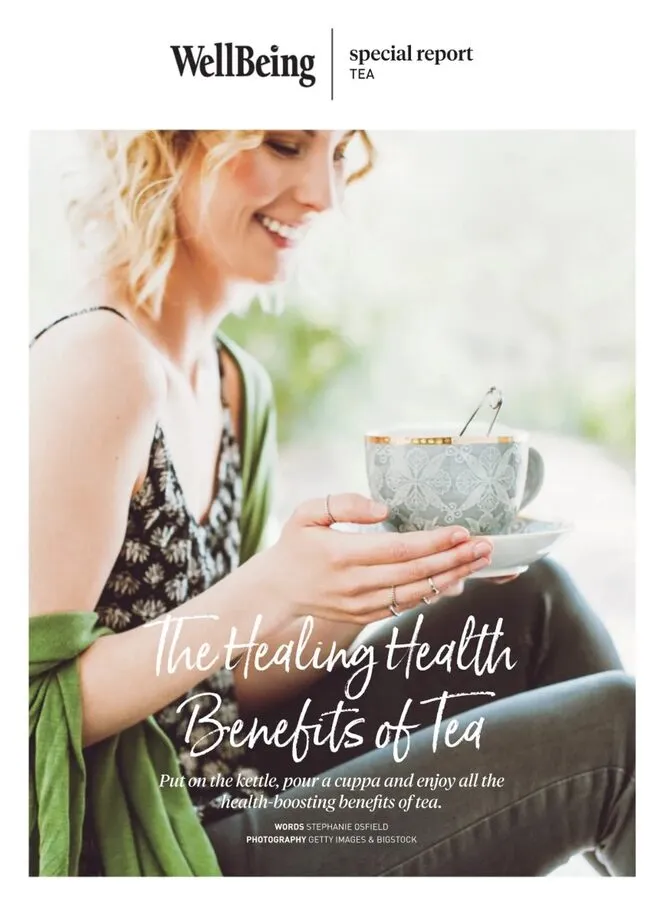
WellBeing Special Report – The Healing Health Benefits of Tea
Summary
WellBeing Special Report: The Healing Health Benefits of Tea examines tea as one of the most accessible sources of dietary antioxidants. The report covers the full spectrum from Camellia sinensis to herbal infusions, ranking teas by ORAC scale values and detailing specific health benefits for heart disease, osteoporosis, cancer and weight management.
Key Topics
▸ Tea science — Antioxidant measurement via ORAC scale; flavonoids and polyphenols as free-radical fighters; measurable blood antioxidant increase within 20 minutes of drinking tea.
▸ Tea types — Non-fermented (white, green, yellow), semi-fermented (oolong), fermented (black/red tea), post-fermented (Pu-erh), scented flower teas and herbal tisanes. Specific teas named: white peony, sencha, Lapsang Souchong, Earl Grey, Darjeeling, Ceylon, English breakfast, Russian Caravan.
▸ Therapeutic claims by tea type — Three to four cups daily for optimal benefit; black tea for endothelial function and blood pressure; green tea linked to prostate and ovarian cancer risk reduction and metabolic rate increase; chamomile for sleep, digestion, wound healing and anxiety via apigenin and glycine; chai spices for metabolism, inflammation and blood glucose; dandelion as diuretic and digestive stimulant.
▸ Practical brewing — Loose-leaf preferred; steep three to five minutes to extract up to 85% of flavonoids; milk, sweetener and lemon do not block antioxidant absorption despite one widely cited study.
What You'll Learn
• Drink three to four cups daily for measurable antioxidant effect
• Green and white teas offer highest ORAC values due to minimal processing
• Chamomile increases antibacterial immunity markers after two weeks of daily use
• Loose-leaf steeping extracts more flavonoids than tea bags
Editor's Take
This special report is a thorough single-subject reference that covers the chemistry, processing, therapeutic claims and practical brewing of tea with more depth than a single magazine feature would allow. The ORAC scale comparison is useful for readers who want numbers, not just general advice. The weakness: the herbal tea section, particularly chamomile and dandelion, contains extensive claims that would benefit from clearer evidence grading. The Australian tea ceremony observation is a charming cultural note. This report suits tea drinkers who want to know exactly what their daily habit is doing inside their body.
Strengths
• Specific ORAC rankings and antioxidant timing (20 minutes post-consumption)
• Processing-to-benefit mapping for all six tea categories
• Chamomile and dandelion coverage rare combination in wellness media
Weaknesses
• Herbal tea claims lack evidence-strength grading
• No direct comparison of caffeine content across tea types
Verdict: Recommended — A practical reference for anyone who drinks tea daily and wants to know which cup delivers what.
