
Happiful – Issue 100 2025
Summary
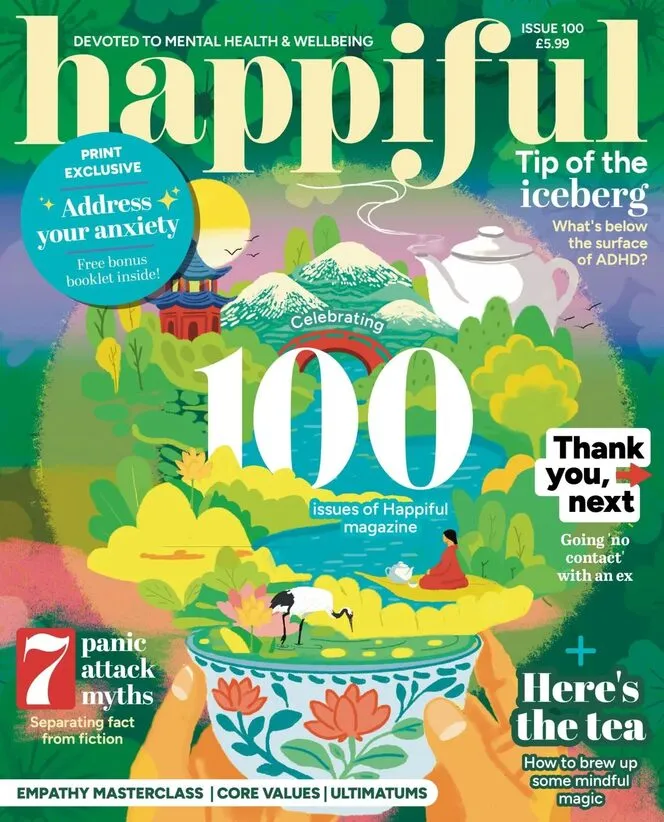
About 60 percent of UK adults experience anxiety that interferes with daily life, and Happiful Issue 100 responds with a free 24-page anxiety guidebook plus features on ADHD, panic attack myths, and going "no contact" with an ex. Celebrating its 100th issue at GBP 5.99, this special edition carries the cover theme "Tip of the iceberg" — exploring what lies below the surface of ADHD.
The cover feature on ADHD uses the "iceberg" model: hyperactivity and inattention are visible above the surface, but below lie rejection sensitivity dysphoria, emotional dysregulation, time blindness, and executive dysfunction. Contributors Helen Unwin (ADHD coach) and Dr Lalitaa Suglani (psychologist) provide expert perspectives. The panic attack myths piece separates fact from fiction — common misconceptions include the belief that breathing into a paper bag helps (it can reduce oxygen to the brain). The "no contact" relationship feature explores when and how to cut ties with an ex for mental health.
Regulars bring practical value: a masterclass in empathy skills, job crafting to make work feel more meaningful, five ways to handle conflict, and mindset practices. The community corner features peer support groups including poolside mental health initiatives. Michelle Elman's column on inner child work and the rewrite-your-story journaling section (print exclusive) add reflective depth.
—————
Content Guide
▸ Cover Story / ADHD
p.16 · Tip of the Iceberg
The ADHD iceberg model reveals hidden symptoms below the surface: emotional dysregulation, rejection sensitivity, time blindness, and executive dysfunction alongside visible traits like hyperactivity and inattention. Helen Unwin (ADHD and confidence coach) and Dr Lalitaa Suglani (psychologist) provide expertise. The article explores how these hidden symptoms affect relationships, career, and self-esteem. Self-acceptance and structured support systems are the foundation for managing ADHD — work with a coach or therapist who specialises in neurodiversity.
▸ Mental Health / Anxiety
p.61 · 7 Panic Attack Myths, Debunked
Common panic attack misconceptions: that hyperventilating into a paper bag is safe (it can lower brain oxygen), that panic attacks cause heart attacks (extremely rare in healthy hearts), and that you should "just breathe." The article separates fact from fiction. Recognise that a panic attack will not kill you. Grounding techniques — 5-4-3-2-1 senses — and slow exhale breathing (4 counts in, 6 counts out) are more effective than paper bags.
▸ Relationships
p.38 · Incommunicado: Is It Time to Go 'No Contact' With Your Ex?
Going "no contact" means cutting all communication with an ex-partner to facilitate emotional healing. The article discusses when it's appropriate (after toxic or abusive relationships), how to implement it (block social media, inform mutual friends, remove reminders), and coping with withdrawal symptoms. The piece also addresses exceptions: co-parenting requires structured, minimal communication. Set a clear boundary and a minimum 30-day period before reassessing.
▸ Mental Health / Menopause
p.25 · Can Menopause Trigger Eating Disorders?
The article explores the connection between perimenopause, hormonal fluctuations, and the onset or recurrence of disordered eating. Shifting oestrogen levels affect serotonin, mood regulation, and body image. The piece is written in response to reader demand and includes expert perspectives. If you notice changes in your relationship with food during perimenopause, seek a therapist who specialises in both eating disorders and women's hormonal health.
▸ Wellbeing / Mindfulness
p.41 · Steeped in Calm
Chinese tea ceremonies as mindfulness practice: the ritual of heating water, steeping leaves, and pouring with intention anchors attention to the present moment. The article walks through the Gongfu tea ceremony, which uses multiple short infusions. You can replicate this at home by choosing a loose-leaf oolong or pu'er, taking 10-15 minutes to focus solely on the brewing process without phones or screens.
▸ Regulars / Expert Column
p.56 · The Roots of Perfectionism
Counsellor Bea Appleby explores how perfectionism often stems from early experiences or messages that love and approval are conditional on achievement. The column offers strategies for identifying perfectionist patterns, challenging all-or-nothing thinking, and practising self-compassion. Track your inner critic for one week — notice when you demand perfection. Then ask: "Would I say this to a friend?"
▸ Regulars / Community
p.28 · Community Corner: Poolside Peer Support Pals
Meet inspiring people running peer support groups at swimming pools — using swimming as a backdrop for mental health conversations. The article profiles community organisers who create safe spaces for people to talk while they swim. Look for peer support groups that combine physical activity with conversation; the side-by-side format reduces the pressure of face-to-face eye contact.
▸ Culture / Positive Pointers
p.74 · Define Your Personal Values
A guided exercise to identify your core values (e.g., kindness, creativity, security, freedom) and align daily actions with them. The article provides a values list and reflection prompts. Choose 3-5 values that feel most authentic, then review your weekly schedule: how many hours align with those values? Adjust one commitment per week to close the gap.
—————
Editor's Take
Issue 100 is a warm, community-driven milestone that prioritises reader connection over breakneck information delivery. The ADHD iceberg piece is excellent — it names hidden symptoms that rarely get airtime. The free anxiety booklet (24 pages, print only) is genuine added value. Weaknesses: the magazine carries a lot of cultural fluff (celebrity interviews, book reviews) that pads the page count without delivering actionable content. The "magical mocktails" and "faces of abuse" pieces are too short to be useful. Photo quality is good but not exceptional for a landmark issue.
Strengths
• ADHD iceberg feature names rarely-discussed hidden symptoms with qualified experts
• Free 24-page anxiety guidebook with habit trackers and reflective prompts
• Community corner highlights genuinely innovative peer support models
Weaknesses
• Culture section padding (celebrity interviews, book lists) dilutes the mental health focus
• Several feature pages are thin on actionable takeaways
Verdict: Recommended — For the ADHD feature and anxiety booklet alone; existing Happiful subscribers will appreciate the 100th issue celebration.
