
Consumer Reports on Health – February 2026
Summary
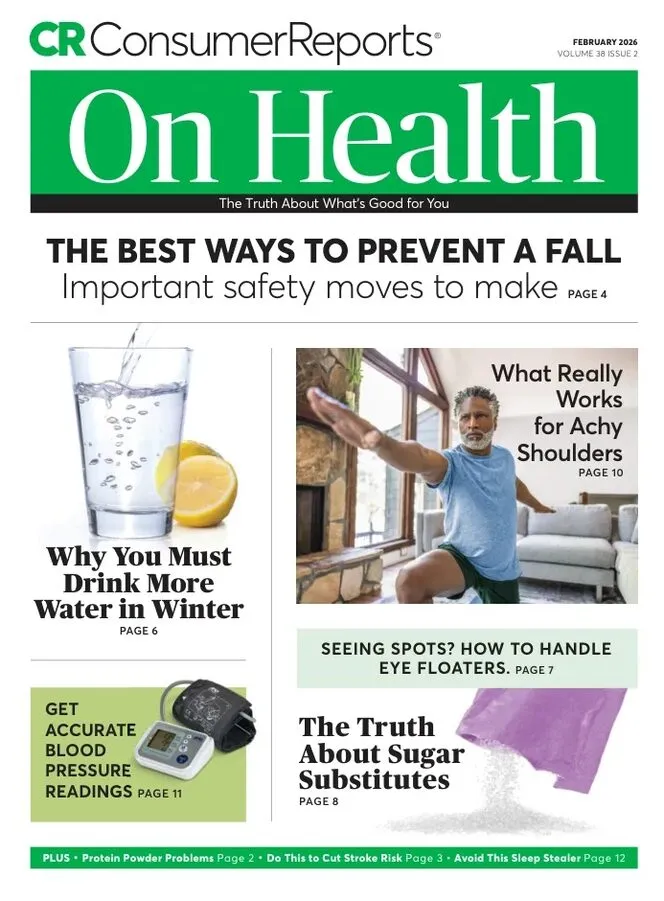
The best ways to prevent a fall — important safety moves every older adult needs — lead the February 2026 Consumer Reports On Health (Volume 38, Issue 2), which also investigates winter hydration needs, eye floater management, sugar substitute safety, achy shoulder relief, and accurate blood pressure readings at home.
The fall prevention feature is the issue's centrepiece: CR reviews home safety modifications (grab bars, improved lighting, removing throw rugs), balance exercises (tai chi, single-leg stands), and medication reviews that identify drugs increasing fall risk. The winter hydration article challenges the belief that thirst is reliable — older adults have diminished thirst sensation and need to drink on a schedule. The truth about sugar substitutes covers erythritol, xylitol, stevia, and aspartame, including new research linking erythritol to elevated cardiovascular risk.
Health Wire delivers short, sourced updates: a study on stairs and longevity, new CDC guidance on RSV vaccines for older adults, and a simple trick to get accurate blood pressure readings at home. CR's ad-free model means every product recommendation — from grab bars to blood pressure monitors — is independently tested.
—————
Content Guide
▸ Cover Feature / Safety
p.4 · The Best Ways to Prevent a Fall: Important Safety Moves to Make
CR reviews the evidence: 1 in 4 adults over 65 falls each year. Home modifications include installing grab bars in bathrooms, improving lighting (night lights, motion sensors), and removing tripping hazards (throw rugs, clutter). Balance training — tai chi, yoga, single-leg stands — reduces fall risk by up to 30 percent. Review medications with your pharmacist annually; sedatives, antihistamines, and blood pressure drugs increase fall risk. Have vision checked yearly.
▸ Health / Hydration
p.6 · Why You Must Drink More Water in Winter
Older adults lose thirst sensitivity with age and are at higher risk for dehydration in cold weather. CR recommends 8-10 cups of fluid daily, using urine colour as a guide (pale yellow = hydrated). Tips: keep a water bottle visible, set hourly phone reminders, consume water-rich foods (soups, cucumbers, melons), and limit caffeine and alcohol which have diuretic effects.
▸ Health / Vision
p.7 · Seeing Spots? How to Handle Eye Floaters
Most floaters are harmless, but a sudden increase accompanied by flashes of light could signal retinal detachment — a medical emergency. CR advises an immediate eye exam if you see a shower of new floaters, flashing lights, or a curtain-like shadow over your vision. For chronic, benign floaters, the article suggests eye exercises and, in severe cases, a procedure called vitrectomy.
▸ Nutrition / Sugar Substitutes
p.8 · The Truth About Sugar Substitutes
CR reviews the evidence on popular sweeteners: erythritol (linked to cardiovascular risk in a 2024 study), xylitol (similar concerns), stevia (considered safe but may alter gut bacteria), aspartame (classified as possibly carcinogenic by IARC at high doses), and sucralose (may affect insulin sensitivity). The safest approach: reduce overall sweetness preference gradually rather than substituting.
▸ Health / Pain Management
p.10 · What Really Works for Achy Shoulders
Rotator cuff issues, frozen shoulder, and osteoarthritis are common sources of shoulder pain in older adults. CR recommends physical therapy as first-line treatment, with NSAIDs for acute inflammation. For frozen shoulder, range-of-motion exercises are critical; recovery can take 12-18 months. See an orthopaedic specialist if pain limits daily activities for more than 2 weeks.
▸ Health / Self-Monitoring
p.11 · Get Accurate Blood Pressure Readings
CR provides step-by-step instructions: empty bladder first, sit quietly for 5 minutes, keep both feet flat on the floor, arm supported at heart level, use a validated monitor with an appropriately sized cuff. Measure at the same time each day, morning and evening, and record readings in a log. Don't take measurements immediately after caffeine or exercise.
▸ Regulars / Health Wire
Quick research: a study in the British Journal of Sports Medicine found that climbing 50 stairs daily reduces cardiovascular disease risk by 20 percent; new CDC guidance recommends RSV vaccines for adults 75+ and those 60-74 with chronic conditions; and a review found that home blood pressure monitoring improves hypertension control by 30 percent compared to office-only measurements.
—————
Editor's Take
February 2026 is a practical, safety-focused issue that earns its keep with the fall prevention and home BP monitoring features. The fall prevention piece is the most actionable — specific home modifications, exercise types, and medication reviews. The winter hydration and shoulder pain articles fill real gaps. The sugar substitutes article is the weakest: it raises concerns without giving clear enough guidance on what to actually do. At 11 editorial pages, it lacks the depth to make the sugar substitutes piece definitive.
Strengths
• Fall prevention feature covers home mods, exercises, and medication risks in one place
• Home blood pressure monitoring guide is step-by-step and immediately actionable
• Winter hydration addresses a genuinely underappreciated risk for older adults
Weaknesses
• Sugar substitutes article raises questions without clear answers
• Shoulder pain piece is too brief for a complex, common complaint
Verdict: Selective read — Buy for the fall prevention and BP monitoring guides; skip the rest.
