
Techlife News – 15 August 2026
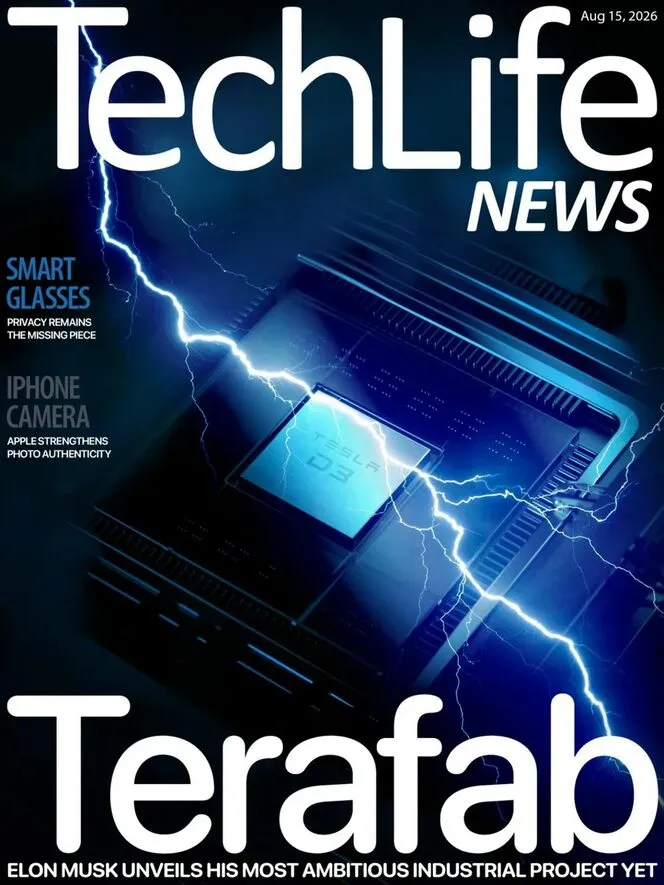
Summary
Virgin Galactic has delayed its return to commercial flights until 2027, with newly priced "Spaceflight Expeditions" seats at $750,000 each — the lead story in Techlife News' August 15, 2026 issue, the weekly tech title at £3.99. The cover also flags Google's Pixel 11 phones with slimmer cameras and more AI, Elon Musk's Terafab industrial project, and Sergey Brin spending $100 million to fight California's tax measure. For readers tracking commercial spaceflight, smartphone hardware and AI investment cycles, this 268-page issue runs 19 features.
The Virgin Galactic article is the issue's reporting anchor, detailing that the Delta spacecraft carries six private astronauts, the company ended 2025 with $338 million in cash and equivalents, burned $95 million in free cash flow in Q4 2025, and reported a $63 million net loss, while targeting up to 125 missions annually. Other headline figures include Foxconn's Q2 profit rising 35% driven by AI demand, Nvidia developing a one-trillion-parameter open AI model, SpaceX projecting $305 billion in revenue by 2027 through AI-linked launches, and Apple preparing a $250 million iPhone AI advertising campaign. Sergey Brin has now spent $100 million fighting California's Proposition 66.
Regular sections include ads from PublishChannel, Luminar 4, and CBS All Access. The Terafab series appears as a one-page entry on page 64. Apple coverage spreads across five articles: iPhone 18 Pro Max battery upgrade, photo-authenticity measures, iCloud+ tiered AI subscription, Apple TV bidding on Open Golf Championship US rights, and extended Back to School deals on Macs and iPads. The Nvidia-versus-Apple battle for tech's most valuable crown gets a dedicated comparison piece.
—————
Content Guide
▸ Cover Story / Commercial Space
p.06 · Virgin Galactic Delays Return to Commercial Flights Until 2027
Virgin Galactic pushes its first commercial research flight to early 2027, with private astronaut missions to follow. The Delta spacecraft carries six private astronauts; a full cabin represents $4.5 million before research payloads and training. Virgin Galactic ended 2025 with $338 million in cash, burned $95 million in Q4 free cash flow, and reported a $63 million net loss. The company targets up to 125 missions annually at three flights per week. Prospective astronauts should watch the spacing between the first glide flight at Spaceport America and the first powered test as the real schedule indicator.
▸ Smartphones
p.38 · Google Unveils Pixel 11 Phones With Slimmer Cameras and More AI
Google's Pixel 11 series launches with redesigned camera hardware and expanded AI features. The article covers sensor changes and on-device AI processing improvements. Android users upgrading from Pixel 9 should assess whether the camera redesign justifies the generational leap.
▸ Industrial / Tech
p.64 · Presenting Terafab: Elon Musk's Most Ambitious Industrial Project
Elon Musk's Terafab project aims to reshape computing architecture and integration at industrial scale. The article covers the project's scope and Musk's stated timeline, though specific production targets were not detailed in the available text. Manufacturing engineers should track Terafab's site selection for supply-chain impact.
▸ Smartphones / Apple
p.78 · iPhone 18 Pro Max Could Receive Its Biggest Battery Upgrade in Years
Apple's next flagship iPhone is expected to feature a significantly larger battery. The article discusses the potential capacity increase and its implications for weight and thickness. Power users should wait for confirmed milliampere-hour ratings before upgrading from the iPhone 17 Pro Max.
▸ AI / Open Source
p.162 · Nvidia Developing 1-Trillion-Parameter Open AI Model to Rival…
Nvidia enters the open-weight AI race with a one-trillion-parameter model. The article covers the training infrastructure and expected release timeline. AI researchers should benchmark against Nvidia's model once weights are released rather than relying on announced parameter counts.
▸ AI / Investment
p.208 · SpaceX Could Reach $305 Billion in Revenue by 2027 Through AI-Integrated Launches
SpaceX projects a $305 billion revenue target by 2027, driven by AI-linked satellite launches and Starlink expansion. The figure represents SpaceX's internal financial modelling rather than analyst consensus. Launch-service buyers should treat the projection as aspirational and negotiate contracts based on confirmed manifest schedules.
▸ AI / Advertising
p.220 · Apple Prepares to Pay $250 Million in iPhone AI Advertising…
Apple allocates $250 million for an AI-focused advertising campaign tied to iPhone. The article covers the marketing strategy and target demographics. Competitors in the smartphone AI space should monitor Apple's campaign messaging for differentiation opportunities.
▸ Politics / Tech
p.254 · Sergey Brin Has Now Spent $100 Million to Fight California's Proposition 66
Google co-founder Sergey Brin has contributed $100 million to oppose California's Proposition 66, a tax measure. The article covers the proposition's provisions and Brin's political spending rationale. California-based tech executives should model both outcomes of the proposition for their personal tax planning.
▸ AI / Competition
p.184 · Nvidia vs. Apple: The Battle for Tech's Most Valuable Crown
A comparative analysis of Nvidia and Apple's market positions, revenue trajectories and AI strategies. The article examines which company is better positioned for long-term dominance. Portfolio managers should note that the comparison favours different companies depending on whether AI training or consumer-device margins drive the valuation.
▸ Apple / Services
p.174 · Apple May Turn iCloud+ Into a Tiered AI Subscription
Apple considers adding AI features to iCloud+ as a tiered subscription upgrade. The article covers potential pricing and feature differentiation. iCloud+ subscribers should evaluate whether current storage tiers meet their needs before AI features trigger a price increase.
▸ Regulars
p.50 · American Film Market Expands to Include AI and Technology…
p.92 · Glasses — Privacy Is the Missing Piece for the Future of AR Technology
p.122 · Tesla or SpaceX: Who Benefits More From Terafab and How
p.138 · Apple May Make Fake Photos Harder to Pass Off as iPhone Shots
p.150 · Foxconn's Q2 Profit Rises 35% as AI Demand Drives Growth
p.196 · Apple TV Eyes US Rights to the Open Golf Championship
p.232 · OpenAI Loses Its Masterminds as Leadership Exodus Accelerates
p.244 · Apple Extends 2026 Back to School Deals on Macs and iPads
p.20 · Meta AI Glasses Face Criminal Complaint in Germany
—————
Editor's Take
A numbers-heavy issue that works best when skimmed for data points. The Virgin Galactic feature is the standout — $750,000 per seat, $338 million cash position, $95 million quarterly burn and the 125-mission target give readers concrete financial and operational metrics. The Sergey Brin $100 million political spending figure is genuinely newsworthy. Weaknesses: the Terafab and Apple-iCloud+ pieces promise more than they deliver, and half the issue's articles exist as headlines only. Zero bylines across 19 articles remains a credibility gap for the title. Best for tech-investment readers who want market-moving numbers fast; space and AI enthusiasts will find the Virgin Galactic and Nvidia pieces worth the cover price.
Strengths
• Virgin Galactic piece supplies exact seat price, cash position, burn rate and loss figures
• Sergey Brin $100M political spending is a material data point for California tax watchers
• Foxconn Q2 +35% profit figure gives verifiable AI-demand signal
Weaknesses
• Terafab and Apple iCloud+ AI articles lack reported detail beyond headlines
• Consistent byline-free aggregation undermines editorial credibility
Verdict: Selective read — Strong financial data points in the Virgin Galactic and Brin stories, but too many headline-only articles to recommend for depth.
