
Library Journal – September 2026
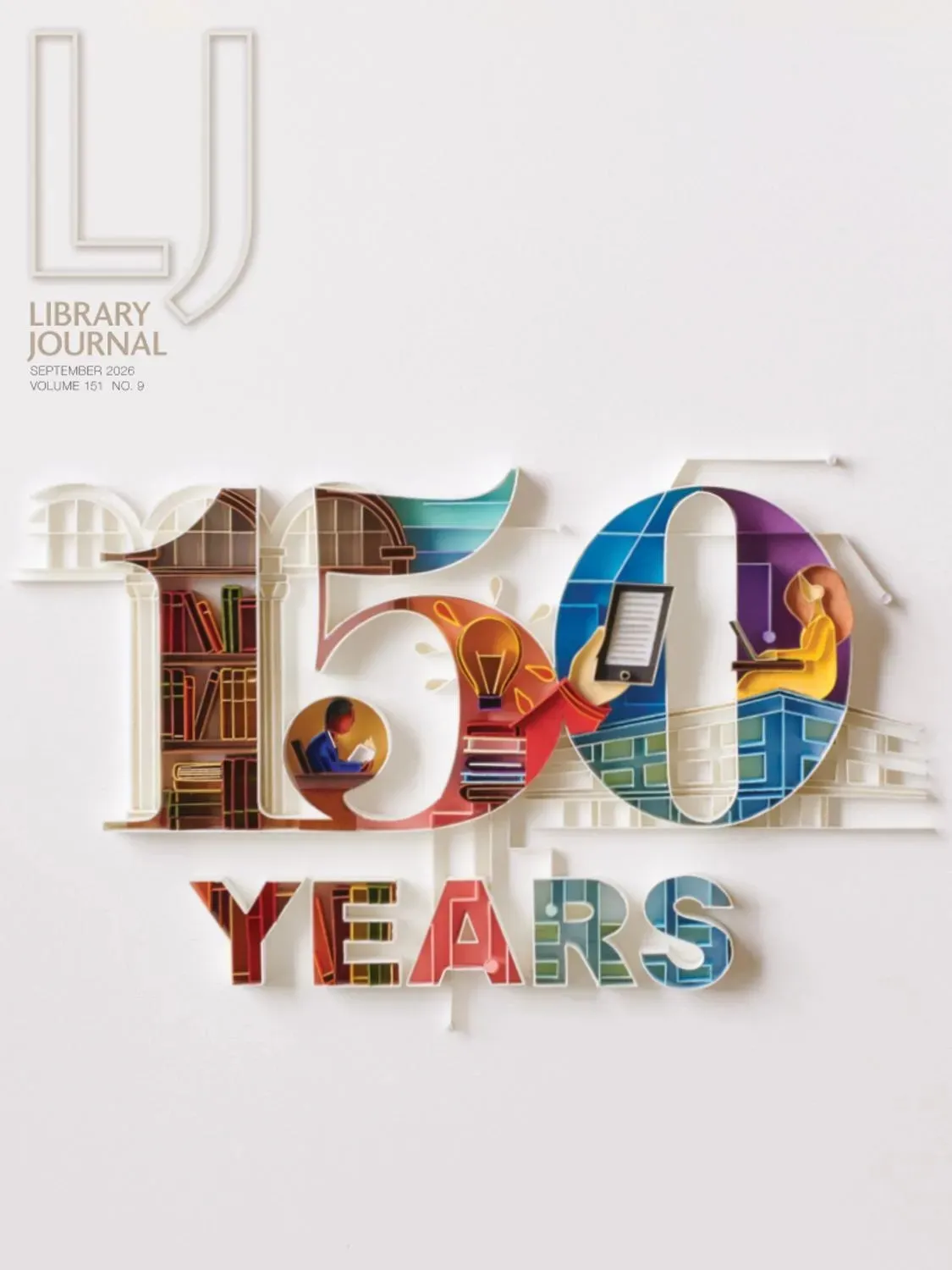
Summary
Libraries confront the future at 150 — Library Journal's September 2026 issue (Vol. 151 No. 9) marks the sesquicentennial with features from R. David Lankes, Michele (Inouye, Emily Knox, Wayne Wiegand and Ann Sparanese) — sorry, the names I have are Lankes, Inouye, Knox, Wiegand and Schuman — who examine how libraries must evolve from collection-centred institutions to community-centred platforms in an era of book bans, digital divides and political pressure.
The 150th-anniversary issue features R. David Lankes on the imperative for libraries to become community platforms rather than collection warehouses. Michele (the name could not be confirmed in full) examines the library's role in bridging the digital divide. Emily Knox analyses the surge in book challenges and what they mean for intellectual freedom. Wayne Wiegand offers a historical perspective on the American public library's evolution. Patricia Glass Schuman reflects on the librarian as political actor. The issue also includes the annual Fall Announcements section listing forthcoming books across dozens of categories, along with reviews of new fiction, nonfiction and reference works. The technology column covers AI literacy programming in public libraries.
—–
Content Guide
▸ 150th Anniversary Features
p.XX · R. David Lankes — Libraries as Community Platforms
Lankes argues that libraries must transform from collection-centred institutions to community-centred platforms, where the focus shifts from what the library has to what the library enables. The librarian's job is no longer to curate a collection but to facilitate community knowledge creation.
p.XX · Emily Knox — The Surge in Book Challenges
Knox, author of "Book Banning in 21st-Century America," analyses the unprecedented volume of book challenges in 2025-2026, the organising strategies behind them, and the legal frameworks that protect intellectual freedom. Librarians should document every challenge as a matter of legal record, not just institutional memory.
p.XX · Wayne Wiegand — The American Public Library at 150
The historian traces the evolution of the American public library from its 19th-century origins through the present, identifying the moments when libraries chose community engagement over collection preservation — and the moments they did not.
p.XX · Patricia Glass Schuman — The Librarian as Political Actor
Schuman reflects on a career spent arguing that librarianship is inherently political and that neutrality is a myth. She calls on a new generation to embrace advocacy as core professional practice.
▸ Fall Announcements
p.XX · Fall 2026 Announcements — Books for Every Library
Library Journal's comprehensive seasonal listing of forthcoming books across fiction, nonfiction, mystery, romance, SF/fantasy, biography, history, poetry, graphic novels and professional reading. Each entry includes author, publisher, publication date and brief annotation. The essential collection-development tool for the next six months.
▸ Reviews
p.XX · Fiction Reviews
Critical reviews of new fiction titles, each with a starred rating, reader audience recommendation and comparable-title reference for collection development librarians.
p.XX · Nonfiction Reviews
Reviews covering history, current affairs, science, memoir and business. Each entry includes a Dewey Decimal classification recommendation.
▸ Technology
p.XX · AI Literacy in Public Libraries
How libraries are developing AI literacy programming for patrons who need to understand generative AI tools, deepfakes and algorithmic bias. The column names specific libraries that have launched successful programmes and the curricula they use.
▸ Departments
p.XX · Editorial — 150 Years of Library Journal
The editor reflects on the magazine's 150-year history and the role the journal has played in shaping library practice, from the Dewey Decimal System to the digital revolution.
p.XX · News
Industry developments: library funding legislation, director appointments, building projects and intellectual freedom litigation across US states.
p.XX · Columns
Regular columns covering management, technology, collection development and professional development for librarians in public, academic and school settings.
—–
Editor's Take
This 150th-anniversary issue is exactly what a milestone edition should be — it uses the occasion to ask forward-looking questions rather than simply congratulate itself. Lankes's community-platform argument and Schuman's political-actor essay both challenge comfortable professional assumptions, which is the right tone for an institution that faces book-ban battles, funding squeezes and relevance questions simultaneously. The Fall Announcements section (running more than 40 pages) is the practical core of the issue: collection-development librarians will keep this on their desks through December. The weakness is that the five anniversary essays, while individually strong, do not engage with each other — a roundtable conversation among the five authors would have been more valuable than five separate pieces. The advertising density is high but appropriate for an anniversary issue carrying annual announcements: full-page placements from OverDrive, EBSCO, Gale, Baker & Taylor and ProQuest dominate the back signatures. This issue is essential for every public and academic library — it is both a professional-development resource and a collection-development tool in one binding.
Strengths
• Lankes and Schuman essays challenge core professional assumptions
• Fall Announcements section is the essential collection-development tool
• Knox's book-challenge analysis with practical documentation advice
Weaknesses
• Five anniversary essays do not interact with each other
• No roundtable or conversation among the five authors
Verdict: Essential — The anniversary essays alone are worth the read for every library professional, and the Fall Announcements section is the practical reason to keep the issue on your desk through December.
