
10-Minute Morning Yoga – 5th Edition – April 2026
Summary
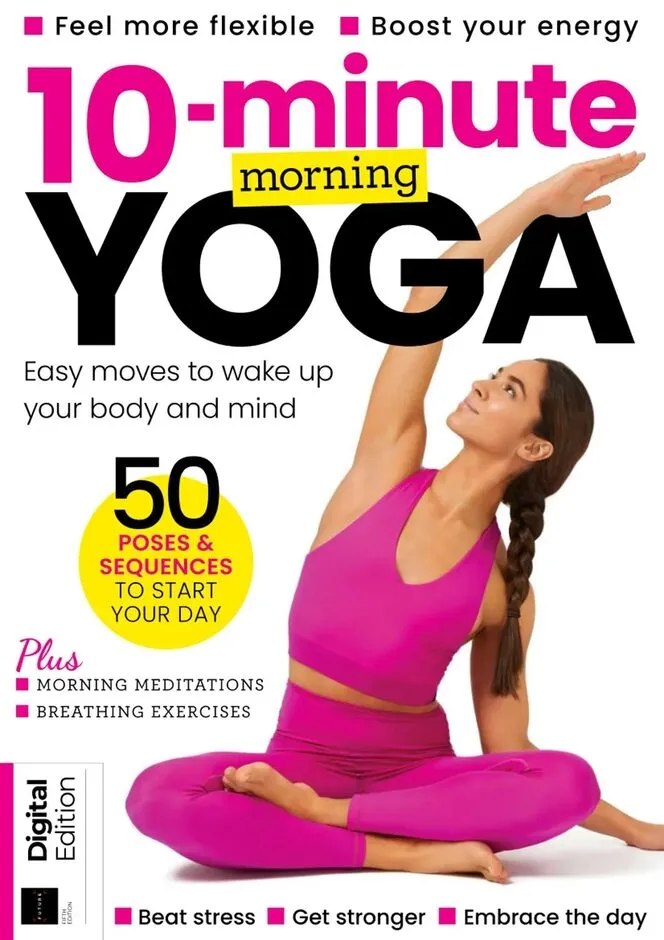
"50 poses and sequences to start your day" — the cover of the Fifth Edition of 10-Minute Morning Yoga, published April 2026, distils a complete home practice into bite-sized sessions designed for even the tightest morning schedule. Expert instructor Laura Gate-Eastley guides readers through standing poses, backbends, sitting poses and reclining poses across 130 pages, with four therapeutic sequences, breathing exercises and morning meditations contributed by breathwork expert Hanna-Jade Browne and meditation teacher Ali Roff Farrar.
The structure follows six progressive steps: discovering the benefits of morning yoga, meeting your instructor, mastering the foundations (breathing, posture, kit), learning the poses, trying the sequences, and deepening your practice with breathwork and meditation. The five traditional principles of yoga — asanas, pranayama, relaxation, meditation and a simple, ideally vegetarian diet — are explained in the introduction, with the concept of eating mindfully until 80 per cent full singled out as a daily takeaway.
—————
Content Guide
▸ Foundations
p.8 · HOW TO USE THIS BOOK
A six-step roadmap that tells the reader exactly where to start based on their experience level. Beginners are directed to the benefits section first; experienced practitioners can jump straight to the pose library. The quickest path to a first completed session is 10 minutes.
p.12 · DISCOVER THE BENEFITS
The mind and body benefits of morning yoga explained: easing stiff muscles, kickstarting metabolism, sharpening mental focus and reducing cortisol levels. A reference list for anyone building a business case for a workplace morning programme.
p.22 · THE MAGIC OF MORNING YOGA
Laura Gate-Eastley explains why yoga is the perfect way to start the day, drawing on the traditional sunrise practice that dates back to Patanjali's Yoga Sutras approximately 2,000 years ago. The philosophical grounding helps new practitioners understand the "why" behind the routine.
▸ The Basics
p.28 · BREATHING BASICS
Pranayama fundamentals including diaphragmatic breathing, Ujjayi breath and Nadi Shodhana (alternate-nostril breathing). Each technique includes a step count and a measurable effect — readers should feel a heart-rate drop within 90 seconds of starting Ujjayi.
p.30 · PERFECT POSTURE
The alignment cues that protect the lower back and neck during a morning practice. Desk workers will recognise the compensation patterns being corrected.
p.32 · TIPS FOR MORNING YOGA
Practical advice on timing, hydration, clothing and space setup. The pre-practice checklist removes the friction that kills morning routines.
p.34 · YOUR YOGA KIT
The equipment needed: a non-slip mat, comfortable clothing, optional blocks and a strap. No expensive gear required.
▸ The Postures
p.40 · STANDING POSES
Foundational standing postures with alignment cues, modifications for beginners and advanced variations. Each pose lists the primary muscle groups engaged. A permanent reference library for self-practice.
p.72 · BACKBEND POSES
Chest-opening and spine-mobility postures that counteract the forward-flexed posture of modern desk life. Office workers should prioritise the sequence recommended here.
p.82 · SITTING POSES
Hip-openers, forward folds and twists suitable for floor-based practice. The modifications for tight hamstrings are the most actionable part of this section.
p.88 · RECLINING POSES
Supine postures for cool-down and relaxation, including supine twists and Savasana variations.
▸ The Sequences
p.102 · SUN SALUTATIONS
The classic Surya Namaskar sequence, broken into individual movements with breath coordination. A 12-movement flow that can be completed in 3-5 minutes once memorised.
p.108 · ENERGISE YOUR DAY
A 10-minute sequence targeting fatigue and low motivation. The combination of backbends and standing balances is designed to elevate heart rate within two minutes.
p.110 · GROUND YOURSELF
A sequence for anxious mornings, emphasising forward folds and slow transitions. The breath-hold counts are prescribed for measurable nervous-system regulation.
p.112 · FIND YOUR FOCUS
Balance and concentration postures linked in a flow that requires single-point focus. Ideal preparation before a high-cognitive-load workday.
p.114 · MORNING STRETCH
A gentle full-body sequence for days when energy is low or time is short. The minimum effective dose for maintaining mobility on rest days.
▸ Take It Further
p.118 · BREATHE INTO BEING
Breathwork exercises by Hanna-Jade Browne, including box breathing and breath retention patterns calibrated for morning practice. The 4-7-8 pattern is prescribed for anxiety reduction.
p.122 · MORNING MEDITATION
Ali Roff Farrar's guided meditation techniques designed to follow a yoga session, including body-scan, mantra and visualisation styles. A 5-minute sitting protocol for readers who believe they "cannot meditate."
p.130 · MEET THE EXPERTS
Biographies of Laura Gate-Eastley, Hanna-Jade Browne and Ali Roff Farrar, including their credentials and teaching backgrounds.
—————
Editor's Take
This is the most accessible home-yoga guide on the market in 2026 if the 10-minute format fits your lifestyle. The progression from breathing basics through posture libraries to full sequences eliminates the "where do I start?" paralysis that kills most home practice attempts. Laura Gate-Eastley's teaching voice is clear and injury-conscious without being overly cautious. Weaknesses: the book's title promises "10-minute" sessions, but the Sun Salutations sequence requires a memorisation period before it can be completed at speed, which may frustrate absolute beginners. The "Meet the Experts" page is too brief to give meaningful context to their approaches. The photography is functional rather than aspirational. This edition is best for absolute beginners looking for a structured entry into morning yoga and for desk workers who need a mobility solution that fits before work.
Strengths
• Clear six-step progression removes the biggest barrier to starting a home practice
• 50 poses and 5 complete sequences offer variety without overwhelming choice
• Breathing and meditation sections extend the value beyond physical postures
Weaknesses
• Sun Salutations require memorisation before the 10-minute claim becomes realistic
• Expert bios are too short to establish authority
Verdict: Recommended — a well-structured home-practice guide that delivers on its 10-minute promise once the initial learning curve is cleared.
