
Bringing History to Life – The Allies Fight Back Part 3, 2026
Summary
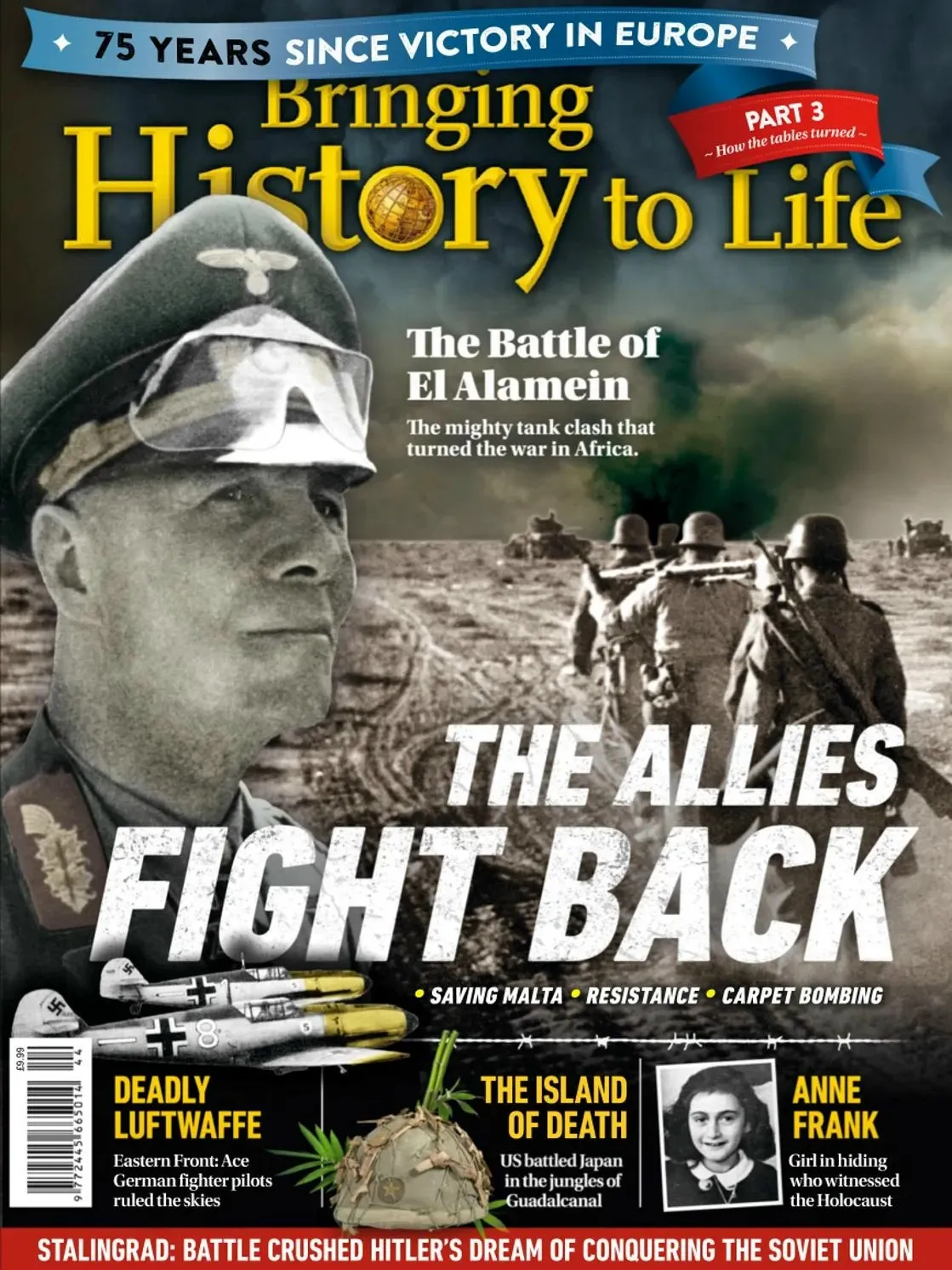
The tables began to turn in autumn 1942 as the Allies stopped the Axis advance at El Alamein Stalingrad and Guadalcanal. Bringing History to Life The Allies Fight Back Part 3 2026 covers the pivotal moments that shifted the war in favour of the Allies on both the Eastern Front and in the Pacific.
Field Marshal Erwin Rommel wrote to his wife Lucia that he could not imagine the fear hanging over him after Montgomery outmanoeuvred him at El Alamein. The volume opens with the North African campaign and Rommel's defeat then moves to the Pacific where US forces drove the Japanese back on the island of Guadalcanal. On the Eastern Front Hitler's troops ran into bitter Russian resistance at Stalingrad where the Red Army proved impossible to crack. The Nazi army is stopped and the city becomes Germany's Waterloo. The volume covers the attack on Stalingrad Anne Frank the girl in hiding who witnessed the Holocaust and the growing brutality of the war including carpet-bombing of cities. The Nazis broke the Geneva Convention and more than half of all Soviet prisoners of war died in German captivity.
—————
Content Guide
▸ Turning Points
p.06 · The Nazi Army Is Stopped
Hitler is desperate to occupy Stalingrad at any cost but the Red Army proves impossible to crack. The article describes the street-by-street fighting that consumed the city. The specific Soviet commanders who organised the defence are named. The encirclement operation that trapped the German 6th Army is explained.
p.12 · Allies Slowed the Japanese Advance
The Imperial Army made the tropical island of Guadalcanal a hell for the US marines who landed there. The article identifies the key objective of Henderson Field. The naval battles that surrounded the island campaign are named. The specific conditions that made the campaign so brutal are described.
p.18 · The Desert Turning Point
Rommel's arch-enemy Montgomery outmanoeuvred him at El Alamein. The article names the specific units engaged on both sides. The artillery plan that preceded the infantry assault is described. Rommel's letter to his wife Lucia is quoted in full.
▸ The Human Cost
p.30 · Anne Frank Girl in Hiding
The article recounts the story of the young diarist who witnessed the Holocaust. The specific dates of her hiding period from July 1942 to August 1944 are given. The betrayal and deportation to Bergen-Belsen are documented.
p.38 · The Brutalisation of War
Both sides tried to break their enemies' spirits by carpet-bombing civilian-filled cities. The article identifies the specific cities targeted. The Nazis broke the Geneva Convention with the result that more than half of all Soviet prisoners of war died in German captivity.
p.46 · Stalingrad Germany's Waterloo
The battle that cost Germany the war in the east is reconstructed. The article names the specific industrial districts that became killing zones. The surrender of Field Marshal Paulus in February 1943 is described. The German casualties of over 800,000 are stated.
▸ War in the Pacific
p.54 · The Island of Death
US forces battled Japan in the jungles of Guadalcanal. The article describes the terrain and climate that made the campaign so costly. The specific US Marine units that landed in August 1942 are named.
—————
Editor's Take
The Allies Fight Back covers the most dramatic shift in the war's trajectory but the content overlaps significantly with standard WWII narratives. The Rommel letter quote gives the opening chapter an emotional anchor. The Stalingrad coverage with its street-by-street detail is the strongest section. The Anne Frank inclusion is the volume's most effective human-history bridge. The simplified presentation again suits the younger target audience. This title works best as a classroom resource for the 1942-43 turning points.
Strengths
• Rommel's letter to Lucia provides an authentic personal perspective
• Stalingrad street-by-street fighting description is the strongest section
• Anne Frank story bridges military history with human experience
Weaknesses
• Content follows a very standard turning-points narrative
• No treatment of the Mediterranean or Italian campaigns
Verdict: Selective read — effective but covers well-trodden ground without new insights.
