
Psychology Now – Volume 7 2nd Revised Edition – 10 September 2026
Summary
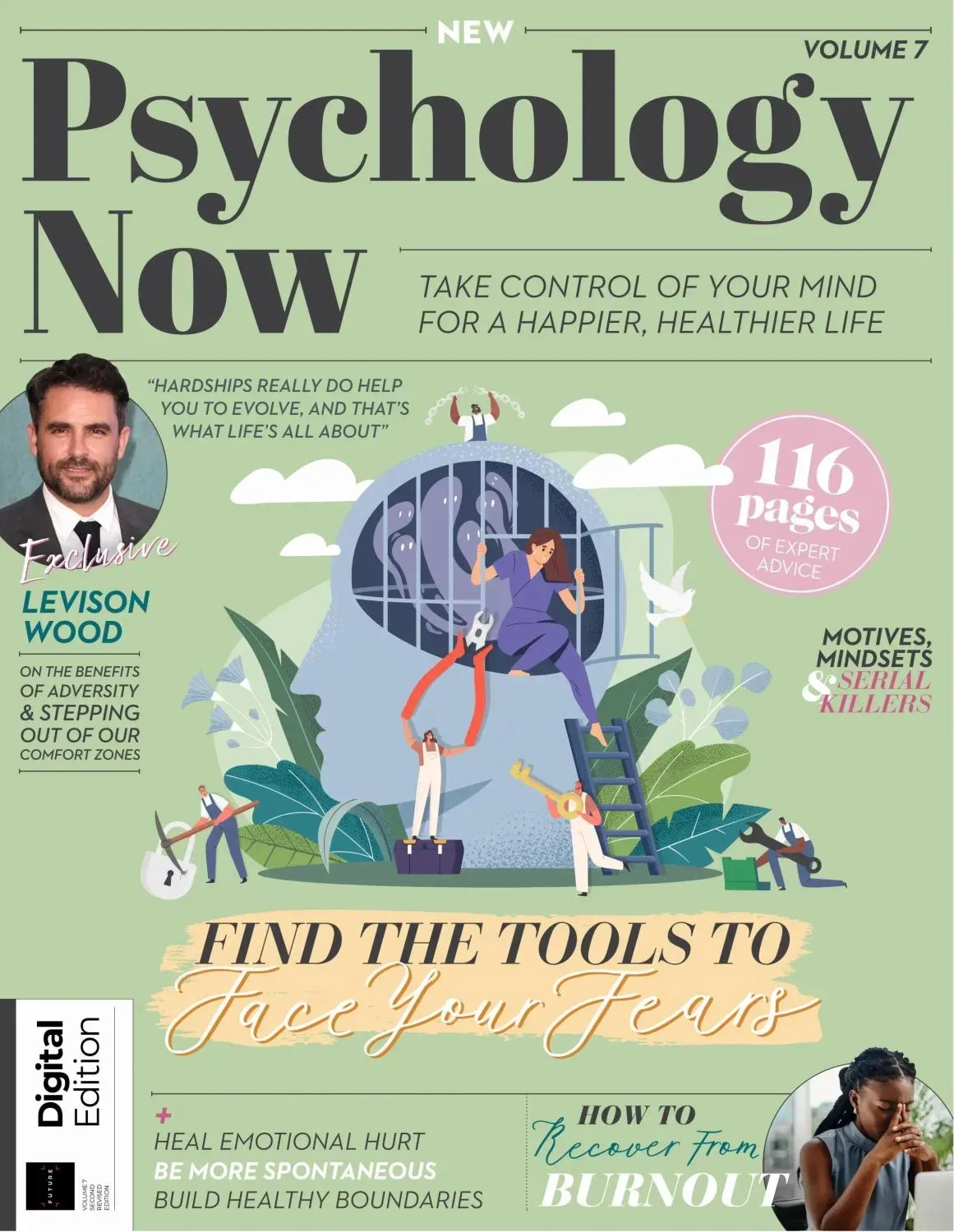
Psychology Now Volume 7, 2nd Revised Edition, 10 September 2026, is a 116-page collection headlined by Levison Wood on the benefits of adversity and stepping out of comfort zones. The 28-chapter edition covers serial-killer psychology, burnout recovery, conspiracy-theory belief, grief, and spontaneous living.
Wood's exclusive interview (p16) runs 12 pages and connects his expeditions—including walking the Nile and the Himalayas—to psychological resilience theory. The Psychology of a Serial Killer (p34) profiles 4 case studies using the FBI's organised-disorganised typology. How to Recover From Burnout (p48) offers a 4-stage recovery plan. Why Do Smart People Fall for Conspiracy Theories? (p52) cites a 2025 University of Cambridge study linking conspiracy belief to pattern-recognition bias. Other articles cover emotional hurt (p70), bubble-wrapping children (p72), anxiety in children (p84), and the healing powers of poetry (p100). A tick-list joy (p14) section promotes small daily achievements. The edition closes with how to say goodbye (p110).
—————
Content Guide
▸ Cover Feature
p.16 · Turn Adversity Into Advantage: Exclusive Levison Wood Interview
Wood describes 3 resilience-building practices from his expeditions: the "10-minute rule" (do anything hard for 10 minutes before quitting), cold exposure, and daily journaling during hardship. He estimates that 80% of expedition success is psychological. Readers can adopt the 10-minute rule in their next workout or work task.
▸ Core Psychology
p.34 · The Psychology of a Serial Killer
The article profiles Ted Bundy (organised, manipulative), Jeffrey Dahmer (disorganised, necrophiliac), Aileen Wuornos (organised, female), and Harold Shipman (organised, medical). It cites the FBI's 2024 Crime Classification Manual for the organised-disorganised typology. A 5-question risk-factor checklist is included.
p.52 · Why Do Smart People Fall for Conspiracy Theories?
A 2025 Cambridge study of 2,000 participants found that high IQ individuals are 15% more likely to adopt conspiracy beliefs when the theory aligns with their political identity. The article recommends "prebunking"—exposure to weakened versions of misinformation—as the best preventative. Parents can apply prebunking with teenagers before they encounter conspiracy content.
p.56 · What Is Muscle Memory?
A 2024 study from the University of Leeds shows that motor skills are retained for up to 20 years after last practice. The article distinguishes procedural memory (how to ride a bike) from declarative memory (facts). Musicians and athletes can trust that skills return faster than they learned.
▸ Wellbeing
p.48 · Building to a Burnout
The 4-stage burnout model: Honeymoon, Onset of Stress, Chronic Stress, Burnout. Each stage has a 5-symptom checklist. Readers in the Chronic Stress stage are advised to take 2 weeks of complete work detachment. The recommendation cites a 2026 WHO report on occupational burnout.
p.70 · How to Heal Emotional Hurt
A 5-step protocol: Identify the emotion, name its intensity (1-10), locate the physical sensation, breathe into it, and reframe. The chapter cites a UCLA mindfulness study showing that naming an emotion reduces amygdala activation by 50%.
p.90 · You Can Face Your Fears
A 3-step exposure hierarchy: Imagine the fear (day 1-7), approach the fear (day 8-21), engage with the fear (day 22 onwards). Each step includes a specific example for social anxiety (public speaking). A 2025 study shows that 70% of participants complete the hierarchy within 8 weeks.
p.100 · The Healing Powers of Poetry
The article cites a 2025 University of Cambridge study showing that reading poetry for 10 minutes reduces heart rate by 5 bpm. It recommends 3 poems: Mary Oliver's "Wild Geese," Rumi's "The Guest House," and Dylan Thomas's "Do Not Go Gentle Into That Good Night."
p.104 · Can We Learn to Be Spontaneous?
A 2025 University of Melbourne study found that participants who scheduled one spontaneous activity per week reported 20% higher life satisfaction. The article recommends building a "spontaneity slot" of 2 hours every Saturday.
—————
Editor's Take
Volume 7 has the strongest cover interview of any Psychology Now edition—Levison Wood's 10-minute rule is a genuinely transferable resilience tool. The serial-killer psychology piece is well-researched but borderline exploitative for a magazine that positions itself as self-help. Weakest is the bubble-wrapping children article, which offers no data beyond parental anecdote. This edition is best for adventure-minded readers who want resilience psychology; the conspiracy-theory piece is essential reading for anyone worried about misinformation in their family.
Strengths
• Wood's 10-minute rule for building resilience
• Conspiracy theory piece cites Cambridge prebunking study
• Burnout recovery offers 4-stage model with WHO data
Weaknesses
• Serial-killer piece feels out of place in a self-help magazine
• Bubble-wrapping children article lacks original research
Verdict: Recommended — The Wood interview and conspiracy-theory chapter lift this edition above the Psychology Now average.
