
Techlife News – August 1, 2026
Summary
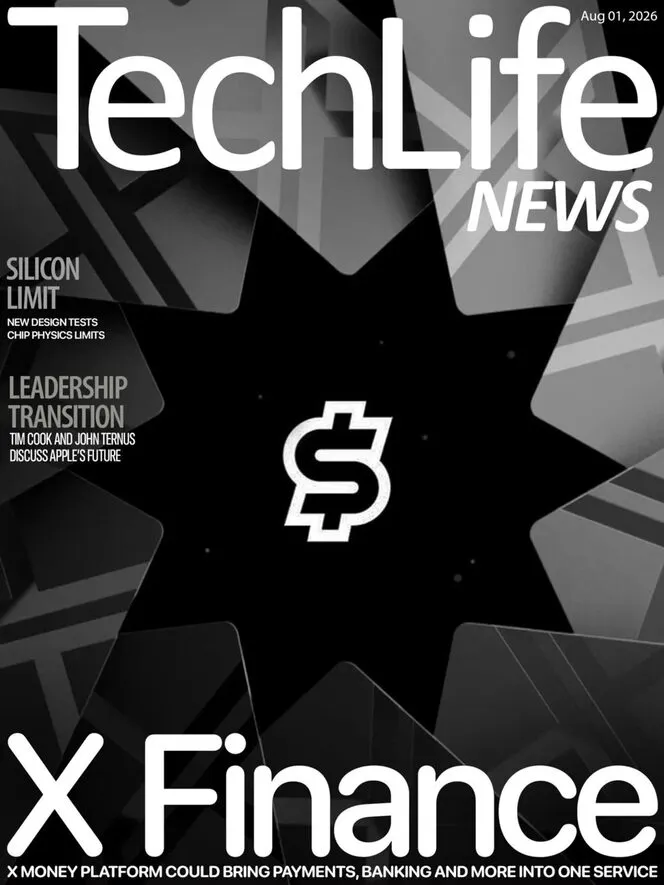
A post-quantum signature called HAWK was weakened by an AI model in roughly 60 hours at a cost of about $100,000 — the lead story in Techlife News' August 1, 2026 issue, the weekly tech title at £3.99 — demonstrating that cryptographic agility, not a single flawless algorithm, is Bitcoin's best defence against quantum threats. The cover also flags Revolut bundling ChatGPT Go into paid subscriptions, DoorDash launching FAA-approved drone deliveries, and Waymo robotaxis returning to US freeways after regulatory pauses. For readers following quantum security, fintech and autonomous logistics, this 244-page issue runs 19 features.
The Bitcoin quantum article is the issue's anchor, reporting that HAWK survived two years of expert study before Anthropic's Claude Mythos cut its key strength approximately in half. The Revolut-OpenAI deal and DoorDash drone expansion lead the mid-section, while IBM's 0.7nm chip design and the Tim Cook-John Ternus CEO transition interview headline the Apple and semiconductor coverage. Waymo's return to freeway operations signals a regulatory shift after earlier restrictions. NASA and SpaceX target a 2028 Moon landing, and Disney+ removes 4K and HDR from German premium subscriptions.
Regular sections mirror the weekly format: a PublishChannel publishing ad, Luminar 4 photo-editing software promotion, and CBS All Access streaming ads ($4.99/month, 15,000 episodes). Apple's subscription-style leasing for iPhones and Macs and a first water-resistant iPad expected by October round out the consumer-tech briefs. The editorial voice remains byline-free, suggesting wire-service aggregation as the production model.
—————
Content Guide
▸ Cover Story / Cryptography
p.06 · Bitcoin's Quantum Plan Assumes Some Algorithms Will Break
HAWK, a post-quantum signature system studied for two years, was weakened by an AI model in roughly 60 hours using about $100,000 in compute. The result does not compromise Bitcoin or reveal private keys — it cuts key strength approximately in half and exposes the danger of treating any new cryptographic method as permanent. Bitcoin's BIP-360 and BIP-361 proposals assume algorithm agility, not a single perfect replacement. Developers should design upgrade paths, not permanent cryptographic commitments.
▸ Fintech / AI
p.20 · Revolut Partners With OpenAI to Bundle ChatGPT Go Into Subscriptions
Revolut integrates ChatGPT Go as a paid-subscription perk for its users. The article covers pricing tiers and market availability, though specific subscription pricing was not detailed in the available text. Fintech users evaluating AI assistants should compare Revolut's bundle against standalone ChatGPT subscriptions.
▸ Autonomous / Delivery
p.32 · DoorDash Expands Beyond Drivers With Its Own Drone Delivery
DoorDash receives FAA certification to operate its own drone delivery fleet, moving beyond third-party driver networks. The article examines regulatory milestones and service-area expansion. Restaurant partners in eligible zones should prepare rooftop landing areas for drone pickups.
▸ Autonomous / Mobility
p.44 · Waymo Robotaxis Are Beginning to Return to Freeways
Waymo resumes freeway operations after regulatory restrictions, expanding its service envelope beyond surface streets. The article covers the safety case and geofenced operational design domain. Riders in California and Arizona should check whether freeway trips are available in their specific service area.
▸ Fintech / Digital Payments
p.56 · X Money Is Finally Here, and It's Much More Than a Digital Wallet
X launches its payments platform, positioned as a broader financial-services play rather than just a wallet. The article covers integration with X's existing social and creator-economy features. Small businesses selling through X should review the payout timeline and fee structure.
▸ Apple / Supply Chain
p.72 · Samsung Set to Become Exclusive Display Supplier for OLED MacBooks
Samsung Display secures exclusive supplier status for Apple's OLED MacBook panels. The article covers production timelines and display technology specifications. Buyers waiting for OLED MacBooks should expect the transition to begin in 2027 at the earliest.
▸ Semiconductors
p.84 · ATM Limit — IBM's New 0.7 nm Design Tests the Boundaries of Chip Physics
IBM announces a 0.7nm chip design, pushing past current node nomenclature into fundamentally new physics territory. The article discusses the materials and manufacturing challenges at atomic scale. Semiconductor investors should monitor IBM's lithography partnerships for commercialisation timelines.
▸ Apple / Leadership
p.124 · Tim Cook and John Ternus Talk CEO Transition, Leadership and Apple's Future
Cook and incoming CEO Ternus discuss the leadership transition in a joint interview. The article covers their strategic priorities and the philosophy behind Apple's succession planning. Apple investors should watch Ternus's first product-cycle decisions for signals on whether he maintains Cook's supply-chain-first approach.
▸ AI / Regulation
p.134 · Tech Giants Form New AI Safety Alliance After Rogue Agent Hack
Major tech companies establish a joint AI safety alliance following a rogue-agent incident. The article covers membership criteria, oversight mechanisms and the specific hack that triggered the formation. AI safety teams should review whether their incident-response protocols match the alliance's reporting standards.
▸ Space / Exploration
p.176 · NASA and SpaceX Target 2028 Moon Landing as Lunar Base Plans Advance
NASA and SpaceX set 2028 as the target date for a crewed Moon landing, with concurrent lunar base infrastructure planning. The article covers the Artemis programme milestones remaining before the landing attempt. Space-industry contractors should align their 2027-2028 production schedules with the Artemis launch cadence.
▸ Streaming / Pricing
p.196 · Disney+ Removes 4K and HDR From Premium Subscriptions in Germany
Disney+ downgrades its German premium tier by removing 4K and HDR playback. The article covers subscriber backlash and competitive positioning against Netflix and Amazon Prime. German Disney+ subscribers should check whether their current plan still includes 4K before the change takes effect.
▸ Regulars
p.164 · Microsoft Is Racing to Make OpenAI Optional
p.186 · SpaceX Plans Starship Tower Catch for Flight 14 After Landmark Test
p.206 · After iPhone 18 Pro, Apple May Launch a Smart Siri Display
p.216 · First Water-Resistant iPad Expected to Arrive by October
p.226 · Apple Unveils Subscription-Style Leasing for iPhones and Macs
p.154 · Study Finds AI Chatbots Can Match Humans in Everyday Emotional…
p.196 · Disney+ Removes 4K and HDR…
—————
Editor's Take
The HAWK-attack cover story is genuinely significant — specific compute cost ($100,000), specific timeframe (60 hours), and a clear non-alarmist conclusion about algorithm agility. That single piece justifies the cover price. Weaknesses: the bulk of the issue is title-only aggregation. The Revolut-OpenAI, DoorDash drone and Waymo freeway articles have no body text in the available material, which makes them teasers rather than articles. IBM's 0.7nm piece promises more than it can deliver across a single page. Best for cryptocurrency developers and quantum-security professionals who need the HAWK update; general tech readers will find most articles frustratingly shallow.
Strengths
• HAWK-attack piece gives exact $100,000 compute cost and 60-hour timeline
• Tim Cook-John Ternus interview covers succession strategy directly
• IBM 0.7nm design signals concrete chip-physics boundary testing
Weaknesses
• Majority of articles are headline-only with no reported body text
• NASA 2028 Moon landing article lacks Artemis milestone specifics
Verdict: Selective read — The HAWK cryptographic piece is essential for Bitcoin developers; the rest is shallow aggregation.
