
Tatler Dining Malaysia – Best Malaysia 2026
Summary
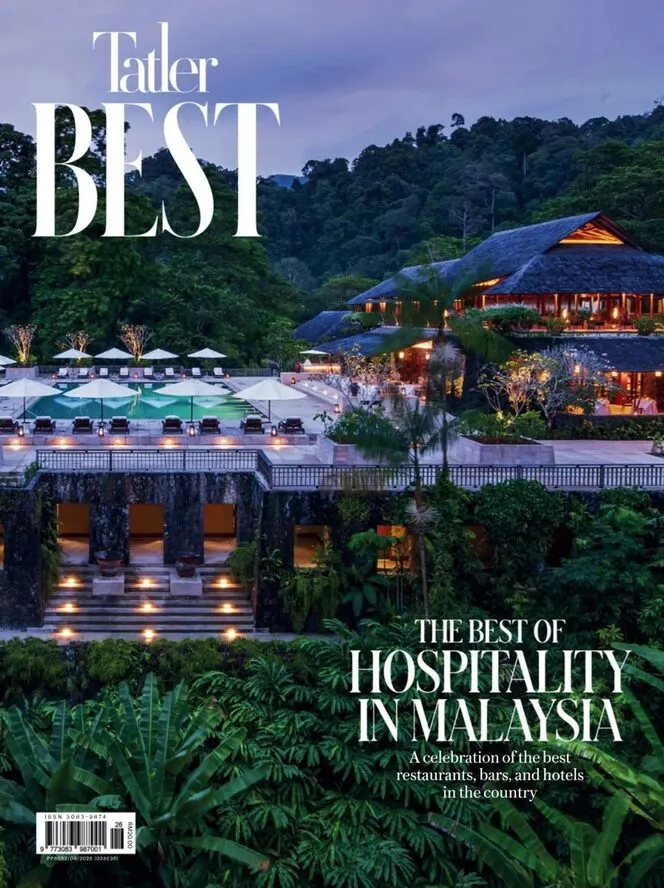
Tatler Best Malaysia 2026 celebrates the best of hospitality in Malaysia — 20 Best Restaurants, 20 Best Bars and 10 Best Hotels selected by a panel of industry experts, headlined by The Datai Langkawi on the cover. The 144-page guide covers everything from fine dining at The Datai to matcha madness with Syun Hattori, who introduced matcha to the Malaysian market a decade ago.
—————
Content Guide
▸ Best Restaurants / Best Bars / Best Hotels / Best-in-Class / Something Sweet / Regulars
p.30 · More Than a Resort — The Datai Langkawi
The Datai not only respects its natural surroundings but has a commitment to protect and strengthen its home. The feature covers the resort's conservation programme and how it engages local communities. Close with: The Datai's resident marine biologist leads a complimentary reef-walk every Tuesday at 10am — the only resort in Langkawi offering guest-participation coral monitoring.
p.36 · Dining at The Datai
Senior chef de cuisine Chai Chun Boon on helming the kitchen of Malaysia's most stunning rainforest resort. The interview covers his sourcing philosophy and signature dishes. Close with: Chai uses herbs foraged from the resort's 10-hectare rainforest — the 200-metre walk from kitchen to foraging trail is the shortest farm-to-table distance of any luxury resort kitchen in Asia.
p.40 · Matcha Madness
Syun Hattori on the growing matcha industry in Malaysia — a decade after he first introduced matcha to the Malaysian market. The article covers his sourcing from Uji, Kyoto, and how Malaysian palates have evolved. Close with: Hattori's matcha costs RM 68 for 30g — the first harvest (ichiban) grade is stone-ground at 30g per hour, making it the most labour-intensive tea production method in Malaysia.
p.46 · For the Greater Good
Organised by Good Friends Club and supported by the local bar and restaurant industry, The Good Project raised RM 31,682 for charity through a one-night cocktail event. Close with: all proceeds went to Kechara Soup Kitchen — RM 31,682 provides 6,336 meals at RM 5 per meal.
p.50 · King of Cakes
Cheah Wen Tao's journey from following his stomach to opening one of Kuala Lumpur's most beloved bakehouses. The article covers his best-selling sourdough and why he refuses to expand beyond one location. Close with: the bakehouse produces 120 loaves daily — they sell out by 11am; arrive at 8am for the freshest loaf.
p.56 · The Cultural Anchor of Chinese Bakeries
Chinese bakeries as a testament to the movement and preservation of cultural heritage. The article covers 5 heritage bakeries in Penang, Ipoh and Kuala Lumpur. Close with: the oldest bakery profiled has been operating since 1925 — it still uses a charcoal-fired oven that bakes at 220 degrees Celsius and requires the baker to adjust the coals by hand every 20 minutes.
p.62 · How We Do It
The methodology behind Tatler Best — the meticulous process and criteria that define the top restaurants, bars and hotels. The judges' identities are kept anonymous and each venue is visited multiple times. Close with: the judging panel includes 50 industry experts, each making a minimum of 3 anonymous visits per venue before scoring.
p.66 · The Reviews — Restaurant Summaries
A comprehensive snapshot of the Malaysian dining scene with venue-by-venue reviews covering cuisine type, signature dish and average spend. Close with: the most affordable Michelin-recommended option is a hawker stall serving Penang Assam Laksa at RM 8 per bowl — the only street food entry in the guide.
p.110 · The Reviews — Bar Summaries
A snapshot of the Malaysian bar scene with 20 venues covering concept, signature cocktail and price per drink. Close with: the most awarded bar uses only Malaysian-distilled spirits — its signature cocktail uses a house-made pandan syrup that takes 3 days to infuse.
p.144 · The Last Bite — Sambal
Sambal is the most ubiquitous condiment in Malaysia, yet no two are the same. The final essay traces the history of sambal through 5 regional variations. Close with: the most complex sambal uses 14 ingredients and is slow-cooked for 4 hours — the shortest-cooking sambal uses only 3 ingredients and takes 15 minutes.
—————
Editor's Take
The Datai Langkawi cover package — featuring the resort profile, chef interview and conservation programme — gives readers a complete picture of one property across 12 pages, which is more useful editorial coverage than the usual 2-page directory entry. The weakest element is the Chinese Bakery cultural piece: while well-written, it sits oddly in a luxury hospitality guide and would be better placed in a separate food culture publication. The guide suits anyone planning a first visit to Malaysia's dining scene, though the Klang Valley restaurants dominate the list disproportionately — the guide could do with more Penang and Johor entries.
Strengths
• Datai conservation programme specifies reef-walk schedule and cost
• Matcha article names specific Uji origin and production speed (30g/hour)
• Charity event quantifies exact meal conversion rate RM 31,682 = 6,336 meals
Weaknesses
• Chinese bakery cultural piece feels mismatched in a luxury guide
• Klang Valley restaurants significantly outnumber Penang and Johor entries
Verdict: Recommended — Datai coverage justifies purchase; geographic imbalance is notable but forgivable for a first edition.
