
WellBeing Special Report – Improving Your Eye Health
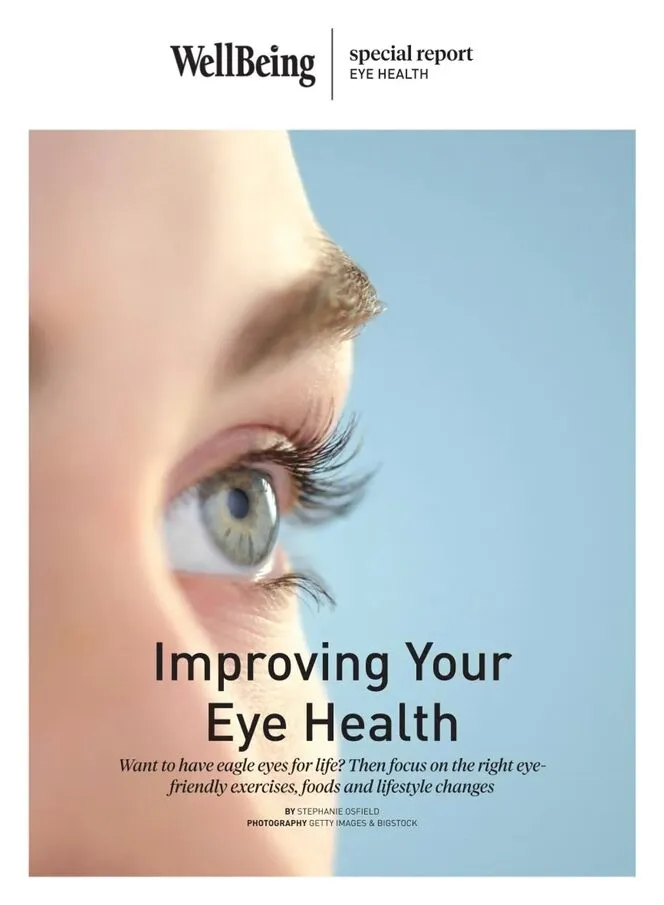
Summary
WellBeing Special Report: Improving Your Eye Health provides a systematic guide to eye anatomy, refractive errors, age-related eye diseases and injury first aid. The report covers cataracts, glaucoma, macular degeneration, and the four refractive errors (myopia, hyperopia, presbyopia, astigmatism) with prevention strategies anchored in regular dilated eye exams.
Key Topics
▸ How the eye works — Light-detecting camera metaphor. The visible eye (external structures) and the hidden eye (internal processing).
▸ Refractive errors — Myopia (near clear, far blurry), hyperopia (far clear, near blurry), presbyopia (age-related lens stiffening, usually onset around age 45-50), astigmatism (uneven corneal curvature causing reading fatigue). Corrections: prescription glasses, contact lenses, medication or surgery.
▸ Eye diseases — Cataracts (lens clouding; risk factors include injury, diabetes, long-term steroid use); Glaucoma (elevated intraocular pressure damages optic nerve); Macular degeneration (central retina cell damage; risk factors: ageing, smoking, poor diet, sedentary lifestyle, family history). All three become more common after age 50.
▸ Prevention — Dilated eye exam every two years for those without diagnosed conditions, annually for those with conditions. UV-protective sunglasses compliant with Australian standard AS/NZA 1067. Antioxidant-rich diet with fruits and vegetables. Eye protection during sport and yard work.
▸ Injury first aid — Black eye: wrapped ice pack max 20 minutes. Grit in eye: gentle warm water flush; if particles remain, seek medical removal. Foreign object: do not remove penetrating objects; seek emergency care.
What You'll Learn
• Dilated eye exams can detect glaucoma before vision loss occurs
• Presbyopia typically begins at age 45 to 50 for most people
• Sun exposure protection requires AS/NZA 1067 compliant lenses
• Black eye ice application must not exceed 20 minutes to avoid tissue damage
Editor's Take
This report is strongest in its systematic explanation of refractive errors and age-related eye disease, presented in language a non-specialist reader can follow. The first-aid section for eye injuries is genuinely practical. The weakness: the prevention section is truncated just as it reaches dietary recommendations, so the specific antioxidant food guidance promised by the introduction is missing. The report also does not address screen-time impact, digital eye strain or blue-light filtering, which are the most common eye health questions in 2025. This suits older readers newly diagnosed with presbyopia or early cataracts.
Strengths
• Clear four-type refractive error classification with onset ages
• Dilated exam frequency guidelines (2 years vs annual)
• Eye injury first aid with specific time limits and action steps
Weaknesses
• Dietary prevention section truncated before specific foods appear
• No coverage of digital eye strain or blue-light exposure
Verdict: Selective read — A solid primer on eye disease and injury, but missing the digital-health guidance most readers also need.
