
WellBeing Special Report – Going Gluten Free – Everything You Need to Know 2025
Summary
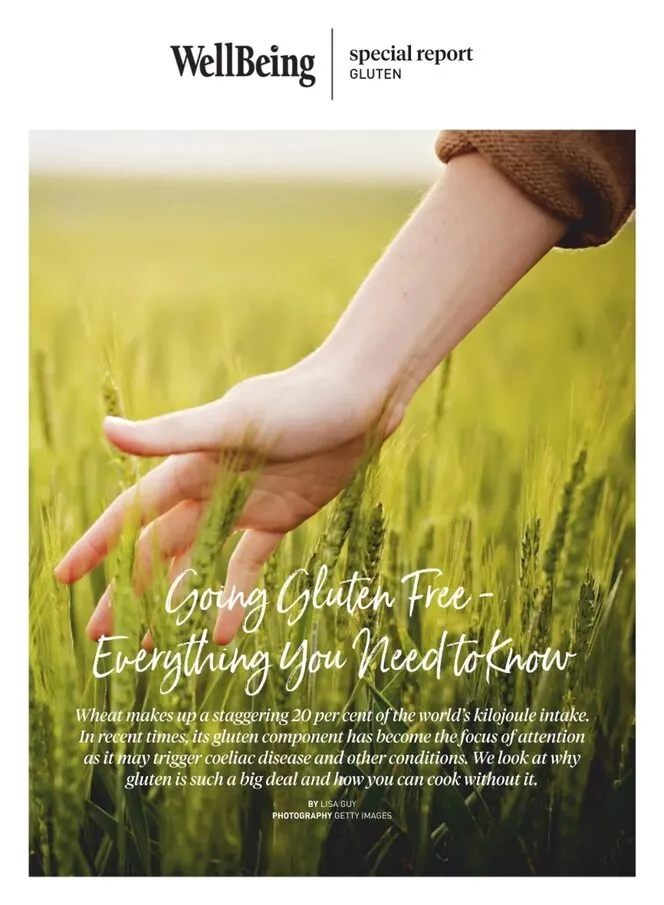
WellBeing Special Report: Going Gluten Free covers the essentials of living without wheat, rye and barley, including identifying hidden gluten in foods, cosmetics and medications, understanding the difference between coeliac disease and non-coeliac gluten sensitivity, and navigating the gluten-free label reliably.
Key Topics
▸ Gluten and the modern Western diet — Why gluten-containing grains dominate processed food and why sensitivity is rising globally.
▸ Hidden gluten — Sources beyond bread and pasta: soups, canned beans, deli meats, sauces, dressings, marinades, stock cubes, ice cream, energy bars, french fries, potato chips, spice blends, soy sauce, beer, malted drinks, instant coffee, licorice, certain vodkas (grain-distilled), and even cosmetics, shampoos, lipstick and medications.
▸ Gut microbes, NCGS and CD — Coeliac disease patients show more pathogenic and fewer beneficial gut bacteria than non-coeliacs. Harmful bacteria can activate immune cells, damage gut lining and produce CD-like symptoms.
▸ Gluten-containing foods — Wheat (including bulgur, couscous, durum, einkorn, emmer, farina, farro, kamut, seitan, spelt, semolina, triticale, graham flour), rye and barley.
▸ Reading labels — Look for certified gluten-free labelling on oats (which are often cross-contaminated during growing, harvesting or processing). Check personal care products for wheatgerm, hydrolysed wheat protein, Avena sativa (contaminated oats) or Triticum aestivum.
What You'll Learn
• Gluten hides in cosmetics, medications, spice blends and even gravy
• Coeliac patients have distinct gut microbiome differences from non-coeliacs
• "Gluten-free" labelled grains may be cross-contaminated without certification
• Oats require certified gluten-free status due to rotation cropping and shared processing
Editor's Take
This report is most valuable for its exhaustive hidden-gluten lists, which go well beyond the standard "avoid bread and pasta" advice. The personal care and medication alert is genuinely useful for newly diagnosed coeliac patients who would not think to check shampoo. The weakness: the content is truncated before reaching any recipes or sample meal plans, which is what most readers actually need after diagnosis. The NCGS versus CD distinction is mentioned but not explained clearly enough for a self-diagnosing reader. This suits someone who has just been diagnosed coeliac and needs a comprehensive "what to check" checklist.
Strengths
• Exhaustive hidden-gluten list covering foods, cosmetics and medications
• Microbiome difference between CD and non-CD explained simply
• Gluten-containing grain names list with alternative names (seitan, farro, kamut)
Weaknesses
• No recipes or meal plans for newly diagnosed readers
• NCGS versus CD distinction is under-explained
Verdict: Selective read — The best hidden-gluten checklist in the catalogue, but you will need a separate resource for what to actually cook.
