
Shipping Today Yesterday – October 2026
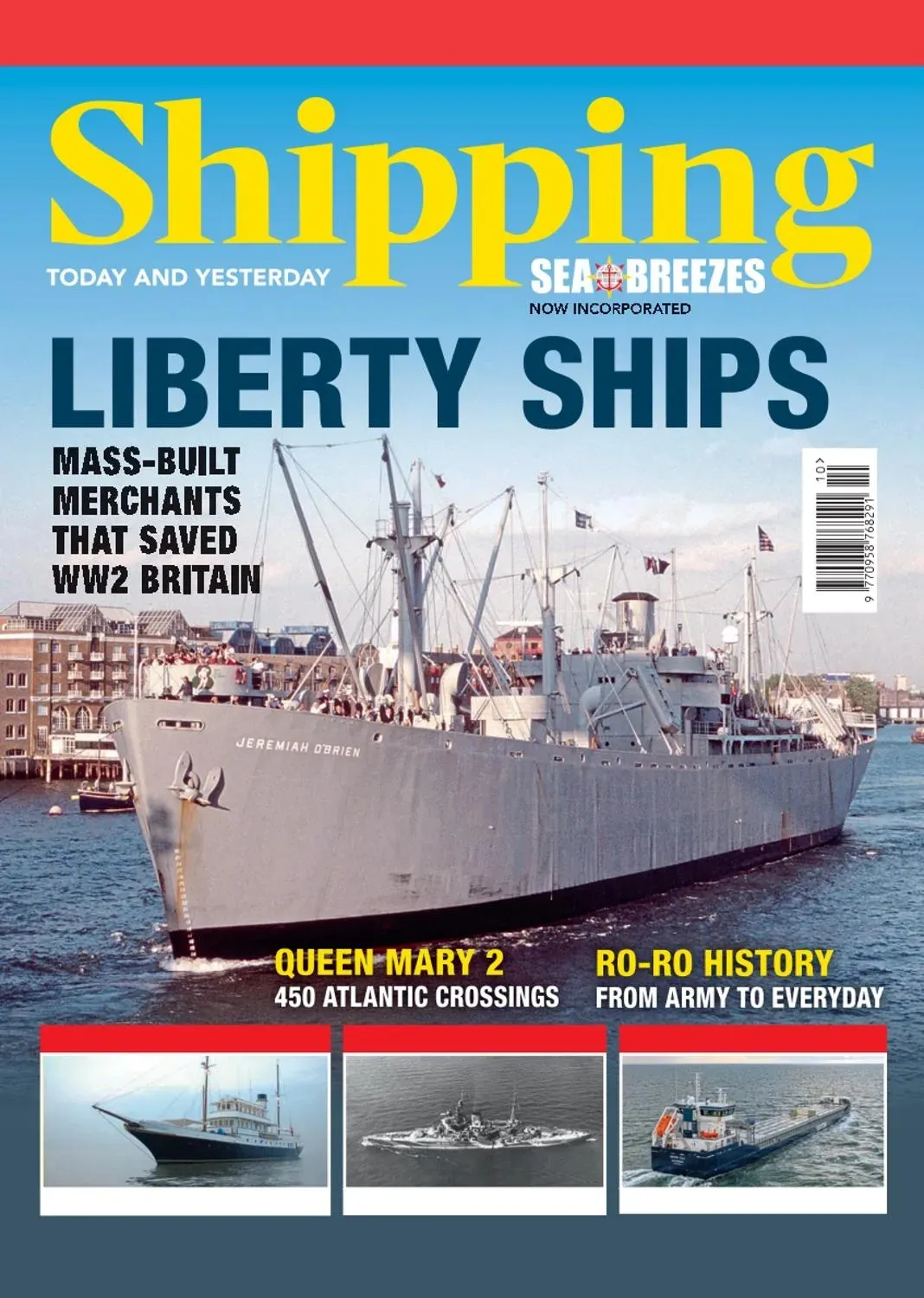
Summary
Over 2,700 Liberty ships were launched between 1941 and 1945, three emerging every two days at peak production, and just four survive today — the cover story in Shipping Today & Yesterday's October 2026 issue, No. 439, priced at £5.50. The cover feature traces how mass-built prefabricated cargo vessels saved Britain during World War Two, built in 18 US shipyards. For readers who follow maritime history, naval engineering and commercial-fleet developments, this 66-page issue delivers Liberty-ship heritage, solar-power feasibility for cargo shipping, and Royal Navy capital-ship analysis.
The Liberty Ships feature anchors the issue, covering the wartime programme that replaced merchant ships lost to German U-boats. Other features include: Ron Neish on Leith-built steam yachts (1875-1928), little-known super-exclusive vessels built in Edinburgh rather than on the Clyde; Wendy Laursen on solar power for cargo vessels, reporting a three-to-five-year return on investment for the Wattlab system; Patrick Boniface on HMS Queen Elizabeth, which fired 2,000lb shells from her 1915 arrival through her 1945 decommissioning; and Port of Call Narvik, the ice-free Arctic Circle port that remains a strategic hot spot.
Regulars include News International, News United Kingdom (Brittany Ferries' hybrid Guillaume de Normandie making its first electric-only Channel crossing, with three ships able to plug into Portsmouth's chargers simultaneously, drawing power that would power half the city), News RNLI, a ro-ro ferries origins piece, Letters (Speak Your Mind!), Picture This Queen Mary 2 (450 Atlantic crossings), and History Titanic artefacts from a London display. The Next Month teaser previews November 2026 content.
—————
Content Guide
▸ Cover Story / Maritime History
p.26 · Liberty Ships Saving Britain
Between 1941 and 1945, over 2,700 Liberty ships were launched from 18 US shipyards, three emerging every two days at peak production. Built to replace merchant ships lost to German U-boats, these prefabricated cargo vessels were a wartime innovation that directly contributed to Britain's survival. Only four Liberty ships survive today. Maritime historians should visit the four surviving vessels before their condition deteriorates further.
▸ History / Shipbuilding
p.42 · Steam Yachts Leith-Made
Ron Neish describes the little-known super-exclusive steam yachts built in Leith, Edinburgh between 1875 and 1928. Unlike the Clyde-built Glasgow vessels, these Leith yachts served a niche ultra-wealthy clientele. Yacht enthusiasts should note that Leith-built steam-yacht records are held at Edinburgh archives and are accessible by appointment.
▸ Technology / Green Shipping
p.48 · Tech: Solar Power Works
Wendy Laursen reports that solar flatracks are now viable for cargo shipping, with the Wattlab system offering a three-to-five-year return on investment. The mainstream industry has moved beyond viewing solar as "a tree-huggers' fantasy" to a genuine fuel-cost hedge. Fleet operators should model the Wattlab ROI against their specific route solar-irradiation data.
▸ Naval History
p.54 · Royal Navy: Queen Elizabeth
Patrick Boniface covers HMS Queen Elizabeth, the battleship commissioned in 1915 that fired 2,000lb shells and served until the end of the big-gun battleship era in 1945. The article places her in the WWI and WWII contexts as Britain and Germany competed to build the largest warships.
▸ Port of Call
p.60 · Narvik — Arctic Circle Hot Spot
Narvik sits inside the Arctic Circle but remains ice-free year-round, making it a strategic location for iron-ore shipping and naval operations. The article covers the port's infrastructure and current commercial traffic. Shipping operators servicing Scandinavian routes should evaluate Narvik as a weather-safe alternative to Baltic ports during winter freeze months.
▸ Shipspotting
p.34 · Picture This: Queen Mary 2
Cunard's Queen Mary 2 has completed 450 Atlantic crossings. A single-image photo essay captures the liner in a memorable moment. Cross-Atlantic passengers should check whether QM2's 2027 schedule includes the same westbound departure that produced this photograph.
▸ Engineering History
p.18 · Ro-Ro Ferries Origins
The ubiquitous vehicle ferry was created with trains in mind. The article traces the roll-on/roll-off concept from railway ferries to modern vehicle carriers. Car ferry enthusiasts will find the railway-origin engineering diagrams useful.
▸ Naval Analysis
p.20 · Royal Navy Capital Ships
A think-piece on whether the UK needs — or can afford — prestige naval vessels in the current strategic environment. The article weighs capability against budget constraints. Defence analysts should compare the RN's current capital-ship count against minimum strategic requirements.
▸ History
p.66 · History: Titanic Artefacts
A recent London display of surviving items from the Titanic is reviewed. The exhibit covers personal belongings, ship fittings and cargo that survived the 1912 sinking. Titanic researchers should request the exhibition catalogue for provenance documentation.
▸ Regulars
p.6 · News International
p.14 · News United Kingdom — Brittany Ferries' Guillaume de Normandie electric crossing
p.16 · News RNLI
p.22 · Supply Ship Marwarri — surviving a mine hit
p.24 · Letters: Speak Your Mind!
p.36 · Newbuild Zero Carbon — Ningyuan Dianpeng
p.65 · Next Month: November 2026
—————
Editor's Take
A cohesive, well-edited issue with a strong historical spine. The Liberty Ships cover story is the standout — the 2,700-ship count, 18-shipyard scale and three-every-two-days production rate give readers concrete industrial-heroism figures. The Leith steam-yachts piece fills a genuine maritime-history gap, and the Wattlab solar ROI article is practically useful for fleet operators. Weaknesses: the Queen Elizabeth piece covers well-trodden ground without new research angles, and the Titanic artefacts entry is a display review rather than an original feature. Best for naval-history readers and commercial-fleet operators tracking green-tech ROI; superyacht enthusiasts will appreciate the Leith steam-yacht angle.
Strengths
• Liberty Ships cover story gives 2,700-ship total, 18-shipyard count and three-every-two-days production rate
• Wattlab solar-power ROI at 3-5 years is a specific, verifiable financial metric
• Leith steam-yachts piece fills an overlooked niche in British shipbuilding history
Weaknesses
• HMS Queen Elizabeth piece covers familiar battleship narrative without fresh research
• Titanic artefacts entry is an exhibition review, not independent reporting
Verdict: Recommended — The Liberty Ships feature and Leith yacht history make this a strong issue for maritime heritage readers.
