
Australian Geographic – July-August 2026
Summary
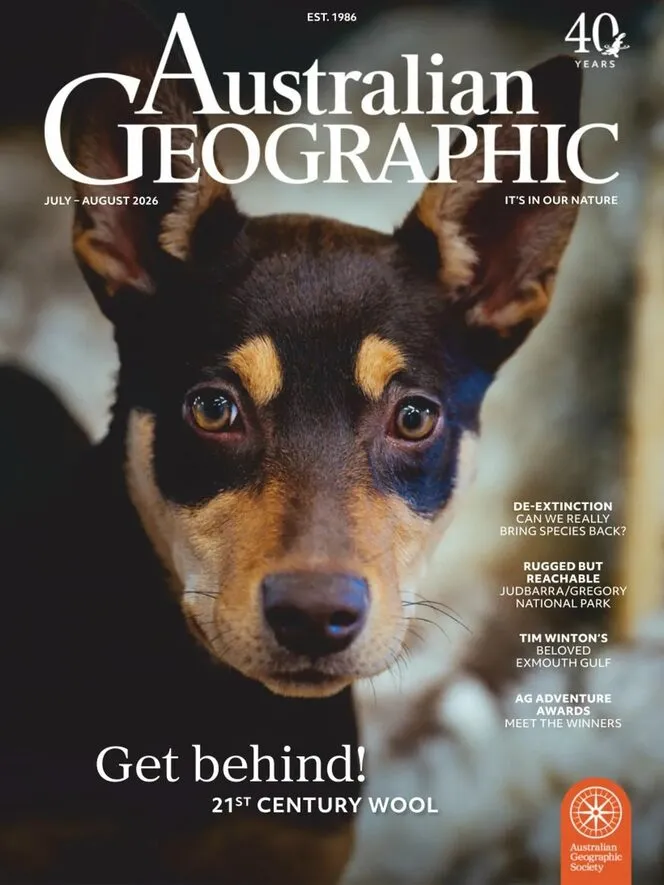
The de-extinction debate moves from science fiction to reality in 2026 as Colossal Biosciences claims to have brought back the dire wolf using gene-editing technology. Australian Geographic July-August 2026 Issue 93 makes this its cover story while also investigating the Exmouth Gulf as Ningaloo Reef's nursery and the 21st century transformation of the wool industry.
The de-extinction feature asks whether the facts measure up to the Jurassic Park rhetoric. Colossal Biosciences co-founded by Ben Lamm and George Church claimed in April 2025 to have achieved the rebirth of the once-extinct dire wolf. The Exmouth Gulf feature by Tim Winton and environmental campaigner Paul Gamblin reveals that the 2,600 sq km gulf in north-west WA has more fish species than the reef and is a humpback refuge. The wool industry feature traces the 21st century transformation of Merino wool. The Adventure Awards winners are showcased. Other features cover the Italian contadini the lost kingdom of Shambhala and the ice ceiling in Antarctic exploration.
—————
Content Guide
▸ Cover Story
p.44 · The De-Extinction Debate
Scientists across the globe are using gene-editing technologies to re-create extinct species. The article names Colossal Biosciences and its claim to have brought back the dire wolf in April 2025. The founders Ben Lamm and George Church are profiled. The specific technical methods used including CRISPR are described. The ethical debate around de-extinction is presented.
▸ Features
p.40 · Courage of the Contadini
The story of Italian farmers the contadini who preserved traditional agricultural knowledge. The article names the specific regions and crops.
p.49 · Smashing the Ice Ceiling
Women in Antarctic exploration are profiled. The article names specific female explorers and their achievements. The historical barriers to women in polar science are documented.
p.54 · The Lost Kingdom of Shambhala
The myth and search for the legendary kingdom is examined. The article traces the origin of the Shambhala legend in Tibetan Buddhism. The specific explorers who searched for it are named.
p.60 · What Adventure Looks Like
The Australian Geographic Adventure Awards winners are showcased. Each winning expedition is named with its location and objective.
p.66 · The Great Unknown
Tim Winton's beloved Exmouth Gulf is profiled. The 2,600 sq km gulf in north-west WA is Ningaloo Reef's nursery with more fish species than the reef itself. The gulf is identified as a sea snake hotspot and one of the most important humpback refuges in the world. Environmental campaigner Paul Gamblin's role in the Save Ningaloo campaign is documented.
p.74 · Where There's Wool There's a Way
The 21st century transformation of the Australian Merino wool industry. The article traces the innovations in wool production and sustainability. The specific farming practices that have reduced environmental impact are described.
p.90 · Ningaloo's Nursery
The ecological significance of the Exmouth Gulf as a breeding ground for marine life. The article identifies the specific species that use the gulf. The conservation challenges facing the region are documented.
▸ Regulars
p.14 · Snapshot The Origins of NAIDOC
The history of NAIDOC Week and its significance to Indigenous Australians. The article traces its origins to the 1920s.
p.18 · Dr Karl Plenty of Fish in the Sea
The science communicator answers a question about marine biology. The specific fish population data is cited.
p.22 · Australia's Most Endangered Powerful Owl
A profile of the powerful owl and the threats it faces. The specific conservation measures needed are identified.
—————
Editor's Take
The de-extinction feature landing Colossal Biosciences' dire wolf claim gives this issue a genuine news hook. The Exmouth Gulf coverage is the emotional and ecological heart of the magazine with the 2,600 sq km figure and the humpback refuge data providing concrete anchors. The Shambhala feature sits oddly alongside the environmental journalism. This issue suits the reader who wants both hard science news and place-based nature writing.
Strengths
• De-extinction feature with Colossal Biosciences and dire wolf claim
• Exmouth Gulf coverage with 2,600 sq km area and ecosystem data
• NAIDOC Week origins piece adds Indigenous history context
Weaknesses
• Shambhala feature feels disconnected from the environmental theme
• Adventure Awards section reads as sponsored content
Verdict: Recommended — strong de-extinction and Exmouth Gulf features carry the issue.
