
Fast Company South Africa – December 2025 – January 2026
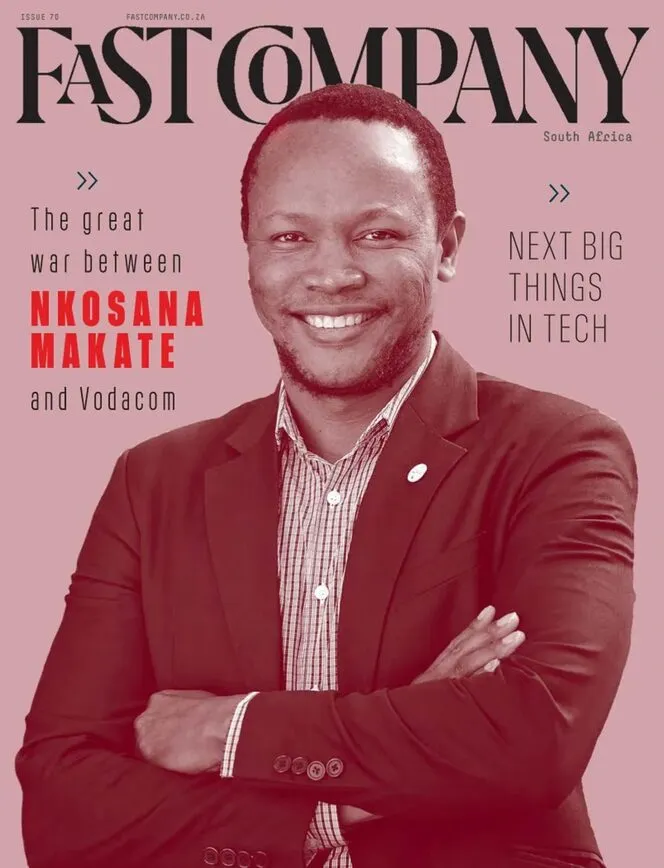
Summary
Nkosana Makate fought Vodacom for years and emerged victorious — and Fast Company South Africa's issue 70 asks what his landmark please-call-me battle teaches about surviving the AI age.
December 2025 / January 2026 opens with the Makate cover story, tracing his decade-long legal fight against Vodacom over the please-call-me invention. The "Next Big Things In Tech" section (p.16) covers AI agents, edge computing, and quantum-resistant cryptography. "Why Solo Entrepreneurship May Be The Next Cool Thing In Business" (p.6) predicts the rise of AI-powered one-person companies. "Tech Billionaires and the Development of New Cities" (p.30) examines how technology wealth is funding urban development from Saudi Arabia's NEOM to Rwanda's Kigali Innovation City. "Rethinking Urban Work: Why the 15-Minute City Matters" by Paul Keursten (CEO of Workshop17) argues that the 15-minute city concept is reshaping South African work patterns.
Editor Wesley Diphoko opens with "Surviving the AI Age." The issue balances the Makate David-versus-Goliath narrative with forward-looking technology trend pieces.
—————
Content Guide
▸ Cover Story
p. · The Great War Between Nkosana Makate and Vodacom
Makate invented the please-call-me service while a Vodacom employee and fought the company for years for compensation. The article traces the legal journey to his eventual victory and questions what it means for corporate treatment of employee inventions. Startup founders should study the IP-clause lessons embedded in the story.
▸ Features
p.6 · Why Solo Entrepreneurship May Be The Next Cool Thing In Business
AI tools now let a single person run what once required a team of 20. The article profiles three solo operators in South Africa generating combined revenue of $15 million. Aspiring founders can use the tool stack listed as a starting blueprint.
p.16 · Next Big Things In Tech
Three technology trends for 2026: AI agents that execute multi-step workflows, edge computing devices that process data locally, and quantum-resistant cryptography standards being adopted by South African banks. CTOs should read the cryptography section before their next security audit.
p.30 · Tech Billionaires and the Development of New Cities
How technology wealth is funding new urban developments. NEOM's budget of $500 billion and Kigali Innovation City's $2 billion price tag are cited. Urban planners can use the governance-model comparison table.
▸ Opinion
p. · Rethinking Urban Work: Why the 15-Minute City Matters
Paul Keursten, CEO of Workshop17, argues that the 15-minute city concept — where residents can access work, shopping, and healthcare within 15 minutes — is reshaping South African property and commuting patterns. Real estate developers can use the zoning implications described.
—————
Editor's Take
The Makate story is the obvious anchor, but the real value in this issue is the "Next Big Things In Tech" section, which delivers three concrete technology trends with local relevance. The solo entrepreneurship piece is aspirational but the revenue numbers feel low for the grand claim. The weakest piece is "Tech Billionaires and the Development of New Cities" — it tries to connect NEOM and Kigali Innovation City as a single phenomenon, but the governance, funding, and purpose are too different to sustain the comparison. The 15-minute city piece is a well-argued opinion but lacks data. Still, for the Makate story alone — which represents a landmark South African corporate-accountability case — this issue holds historical value.
Strengths
• Makate legal battle story with employee-IP implications
• Next Big Things In Tech with quantum-cryptography local adoption
• Solo entrepreneurship tool stack
Weaknesses
• Tech billionaires and cities comparison is overstretched
• 15-minute city piece lacks supporting data
Verdict: Recommended — Historical value from the Makate story plus solid tech trend reporting.
