
History Extra – October 2026
Summary
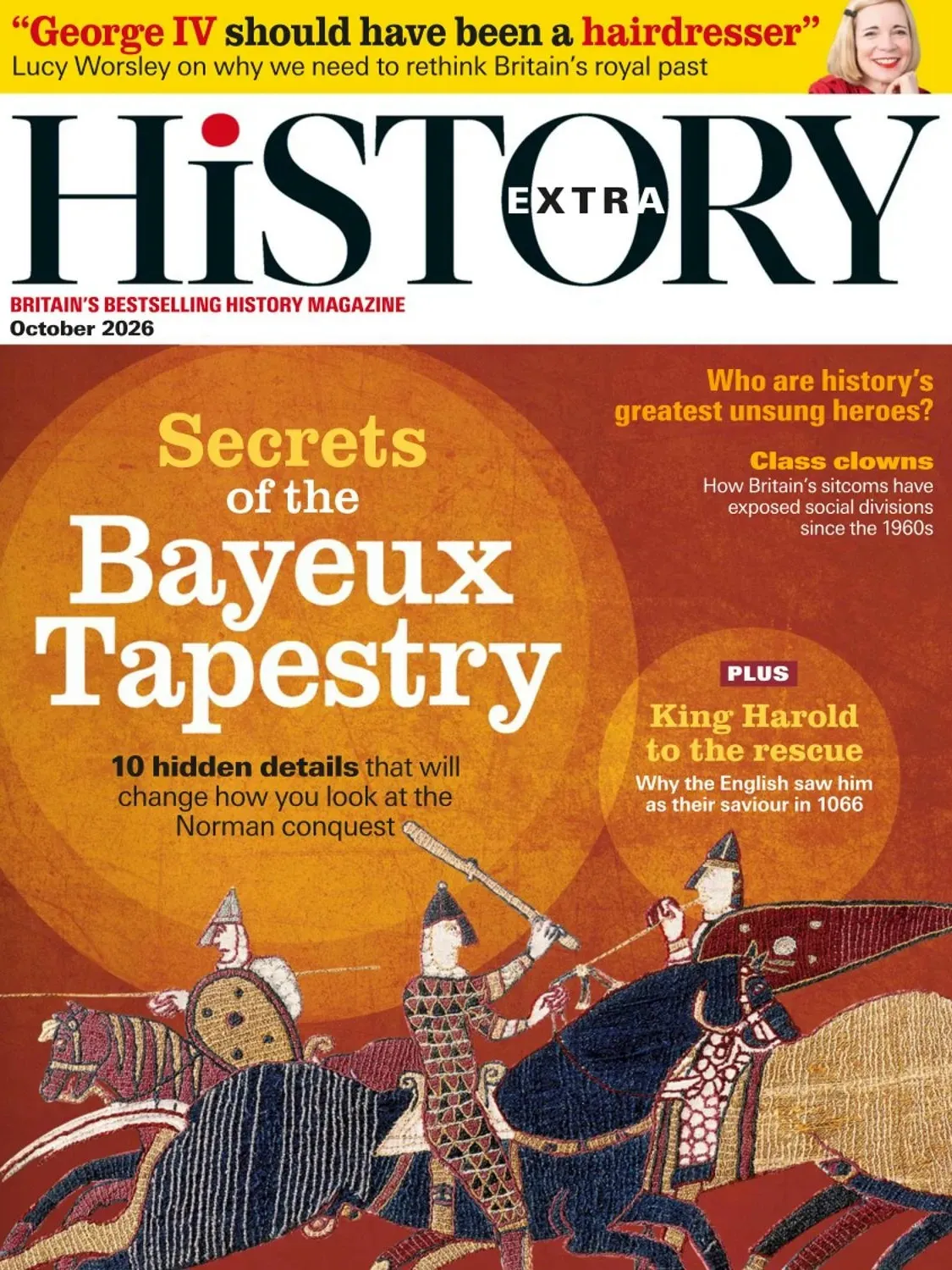
King Harold secured the English throne in 1066 through political manoeuvring not battlefield luck and the Bayeux Tapestry now back in England for a historic 10-month loan holds 10 hidden details that challenge how we see the Norman Conquest. History Extra October 2026 leads with these two interlocking features.
Tom Licence reveals the real reason why the Anglo-Saxon earl was able to seize the throne before Harold Hardrada and William challenged him. David Musgrove and Michael Lewis pick out 10 surprising facts about the Bayeux Tapestry including the enigmatic woman Alfgyva and the naked man beneath her. Lucy Worsley argues that we need to rethink Britain's royal past and suggests that George IV should have been a hairdresser. Catherine Ross charts five moments when weather forecasts shaped history. Laura Minors investigates what sitcoms tell us about working-class Britons from the 1960s to today. The unsung heroes feature selects eight figures who deserve wider recognition including a 16th-century nun whose prophecies enraged Henry VIII.
—————
Content Guide
▸ Cover Story
p.20 · How King Harold Conquered England
Tom Licence presents a radical new theory on why Harold Godwinson was able to secure the throne in 1066. The article argues that Harold's success was rooted in political alliances rather than military might. The specific noble families he courted are named. The diplomatic groundwork that positioned him as Edward the Confessor's preferred successor is documented.
p.25 · Secrets of the Bayeux Tapestry
David Musgrove and curator Michael Lewis pick 10 surprising facts about the world-famous embroidery. The article identifies the enigmatic scene labelled Ubi unus clericus et Alfgyva featuring a woman and a tonsured cleric. The naked man with a swollen member in the border beneath is analysed. The tapestry's journey from the museum in Bayeux to its London display at the British Museum from 10 September 2026 to 11 July 2027 is described.
▸ Features
p.35 · Who Are History's Greatest Unsung Heroes
A panel selects eight figures from the past who deserve wider recognition. Hayley Nolan tells the story of a 16th-century nun whose prophecies enraged King Henry VIII. Each entry names the figure their achievement and the reason they were overlooked.
p.41 · Winds of Change
Catherine Ross charts five moments when weather forecasts shaped history. The article covers the storm that scattered the Spanish Armada the weather at Passchendaele in August 1917 where 127mm of rain fell in 31 days and the D-Day forecast. The founding of the Met Office and its role in military planning is traced.
p.52 · Class Clowns
Laura Minors investigates what British sitcoms reveal about the evolving status of working-class Britons from the 1960s to today. The article names specific programmes: Steptoe and Son Till Death Us Do Part and The Royle Family. The shift from satire to social realism in working-class representation is charted.
▸ Interview
p.68 · Lucy Worsley
The historian argues that we need to rethink Britain's royal past. Worsley suggests that George IV should have been a hairdresser and reassesses Henry VIII's reputation. The interview covers her approach to making history accessible to television audiences.
▸ Regulars
p.94 · Diary Exhibitions and Events
The Bayeux Tapestry exhibition at the British Museum is the headline entry. The display runs for 10 months with tickets released in phases. Other events across the UK are listed.
p.102 · Cities Krakow Poland
A travel feature exploring the history of Krakow. The article identifies the key historical sites and their significance.
—————
Editor's Take
The linked Harold and Bayeux Tapestry features give October's issue a cohesive spine that September's lacked. The weather and history piece by Ross offers a genuinely original angle with the specific 127mm Passchendaele rain data as its anchor. The sitcoms feature is a smart cultural history piece. The unsung heroes list format spreads coverage too thin across eight entries. This issue suits readers interested in the 1066 period and the intersection of culture and history.
Strengths
• Tom Licence's Harold theory offers a genuinely new 1066 angle
• Bayeux Tapestry secrets feature with curator Michael Lewis adds authority
• Weather and history piece is a genuinely original concept
Weaknesses
• Unsung heroes list format prevents depth on any single figure
• Lucy Worsley interview runs too short to develop her arguments
Verdict: Recommended — the strongest History Extra issue of the three 2026 monthlies.
