
Horse Rider USA – Winter 2025
Summary
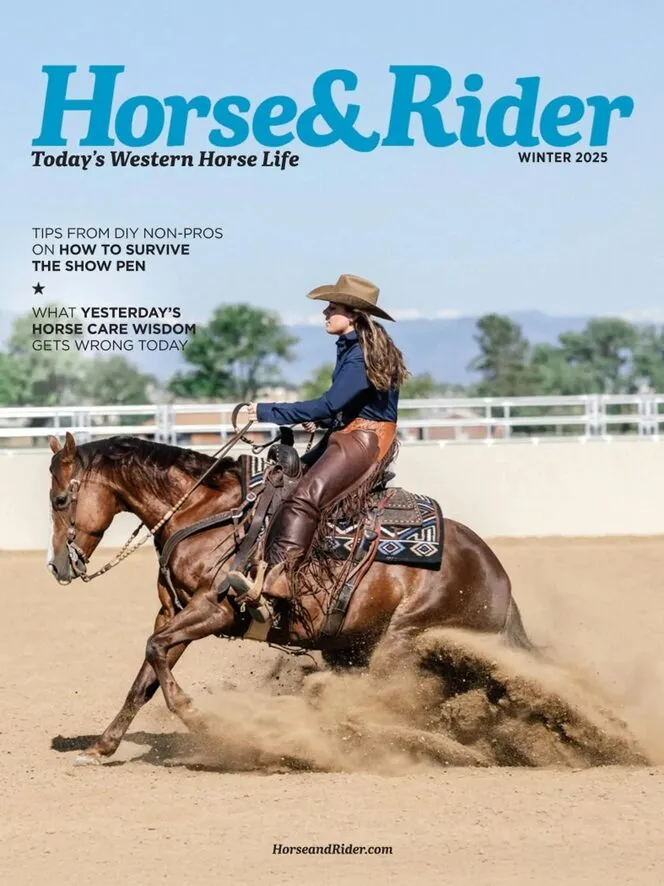
Horse & Rider USA Winter 2025 hands four DIY non-pros, Nicole Barnes to Kimberlee Gabel, a blueprint for winning without a trainer, while Dr. Barb Crabbe dismantles horse-care myths like Betadine wound scrubbing and alfalfa bans that can actively harm your horse.
The cover feature puts four DIY non-pros—Nicole Barnes, Mackenzie Fugitt, Kate Bradley Byars, and Kimberlee Gabel—under the microscope, each explaining how they budget entries, split tack stalls, and film their own rides while working full-time. Their answers get specific fast: hotel-reward points, fuel-app discounts, secondhand show clothes, and group cattle lessons instead of pricey one-on-ones. Paired with it, Dr. Barb Crabbe's "Old Habits Die Hard" attacks five barn traditions, from Betadine scrubs to alfalfa bans, and replaces each with evidence-based protocols.
Ride & Train carries the winter load. Kody Ward, an RSNC Hall of Famer, walks through a five-step ranch sorting drill that uses the cow itself to wake up a lazy horse. Al Dunning contributes six small-arena fixes for riders stuck indoors, and 2024 Trainer of the Year Eric Priest rebuilds reining confidence on four basics—forward, back, left, right. Shyanne Smith keeps kids progressing off-horse with tack quizzes and showmanship drills, while judge Marvin Kapushion places three 2-year-old Quarter Horse mares and shows his reasoning.
HorseLife handles the cold months. A respiratory health column lists five dust-cutting moves—soak or steam hay, strip wet bedding daily, water the indoor arena—before reaching for meds like dexamethasone or inhaled fluticasone. A founder-rehab walkthrough covers the first 72 hours, therapeutic shoeing options such as heart-bars, and long-term diet control. The travel page previews Fort Worth's Cowtown Showdown, a January 19, 2026 ranch sorting benefit aiming to raise $500,000 for Cook Children's, with entries already sold out. Supplement roundups pad the section but include real prices.
—————
Content Guide
▸ Cover Story
p.28 · No Trainer? No Problem.
Nicole Barnes hauls in for lessons only when her green horses need it; Mackenzie Fugitt pulls show patterns offline, films her rides, and buys show clothes secondhand; Kate Bradley Byars trades marketing work to Bud Lyon and Shannon Pigott for training help; Kimberlee Gabel reviews video with her husband and keeps grass cattle fresh through late summer. Their shared rule: doing it yourself does not mean doing it alone. Steal their specifics—split tack stalls, coordinate group lessons, track expenses monthly, and skip a class when your horse needs a break. Barnes puts it bluntly: budget for haul-in lessons when you lack the skill; there is no shame in that.
p.34 · Old Habits Die Hard
Dr. Barb Crabbe dismantles five traditions with evidence. Wounds older than 12 hours can often still be sutured after trimming, and Betadine damages tissue—clean with saline and bandage instead, because wounds heal faster moist. Studies show support boots heat soft tissue, with polo wraps worst, so pick ventilated boots and skip them on hot days for non-interfering horses. Cold-water hosing and letting a hot horse drink are both safe. Alfalfa buffers stomach acid before training and runs lower in carbs than many hays. That bottle of SMZs in the tack room? Fever and snot usually mean a virus, and reaching for antibiotics fuels resistance.
▸ Ride & Train
p.16 · Ranch Sorting Drills For a Dull Horse
RSNC Hall of Famer Kody Ward fixes the horse that stalls behind cattle. Start with dry work until the horse moves forward off your leg without kicking every stride. Then push him up into the cow, exaggerating cues until the cow moves away, and when the cow stops, ride past its hip instead of pausing—this teaches follow-through. Reconnect immediately: legs first, reins second. If energy fades, trot a small circle, then go back to the cow. Quit the moment he offers honest effort; drilling past the try teaches him to dread the job. Ward's Sorting Smart video series runs on Ride TV.
p.18 · Small Arena Hacks
Al Dunning, training horses in Scottsdale for over 40 years, gives six fixes for winter's small indoor pen. Work at the jog to refine small circles and arcs. Square your corners to stop the lean. Run his "five basics" checklist—forward with rate, equal turns both ways, accurate stop, smooth backup, collection. Change leads across the diagonal with a stop and sidepass first, then without. Fix inside ducking with a perfectly timed rollback toward the fence. And skip run-and-stop work in a small pen, or your horse will quit running long; lope several straight laps before asking for any stop.
p.20 · Foundation Focus
Eric Priest, Horse&Rider's 2024 Trainer of the Year, rebuilds confidence by testing four basics at every ride start: forward, back, left, right—no advanced work until they hold. For reining stops, he works straightness first: let the horse drift 10 feet off the line, circle back, then correct at five feet, then two, until straight is the easiest answer. Then practice "whoa," sit deep, and back up at a walk before ever adding speed. His mental-game advice for shows: nobody is watching you as closely as you think, so stay in your zone and sell your run.
p.22 · Winter Fun With Horses
Central Texas trainer Shyanne Smith fills cold months with off-horse learning. Tape labeled cards or fingerpaint onto the horse to teach anatomy parts. Quiz tack pieces in short sessions and pull diagrams from online for study at home. Time your child's full saddling routine—catch, groom, tack up—then shrink the time each week so spring riding starts independent. Explain feed choices during morning and evening chores, and practice showmanship turns and backing in the barn aisle. Before season's end, try on every piece of show attire from hat to boots while there is still time to order a size up.
p.25 · Conformation Clinic: 2-Year-Old Quarter Horse Mares
Judge Marvin Kapushion of Kapushion Training, Whitewater, Colorado, places three 2-year-old reining mares using balance, structural correctness, breed and sex characteristics, and muscling. Mare B wins on level-topline balance, a clean throatlatch, and hocks near level with her knees; Mare C takes second with a powerful croup carryover but a smaller eye and lower neck tie-in; Mare A lands third for a long middle, steep shoulder, and too-straight hocks. His process tip: when the top two are close, place your bottom horse first and work upward. Compare your own placings against his before reading the verdicts.
▸ HorseLife
p.9 · Cowtown Showdown
Ride to Fort Worth on January 19, 2026 for the inaugural Cowtown Showdown benefit ranch sorting at the Coliseum, where rider entries sold out in two hours and every dollar goes to Cook Children's oncology. The event targets $500,000 total and pits teams against a $100,000 purse, with a Celebrity Sorting featuring rodeo pros and Hollywood actors plus an in-arena concert. Cannot attend? Watch live on Ride TV or donate online. Make a weekend of it: the Fort Worth Stock Show runs January 16 through February 7, and Cattleman's Steakhouse, open since 1947, sits around the corner.
p.10 · Breathe Easy This Winter
Winter barns trap ammonia, dust, and carbon dioxide, so fix airflow before medicating. Install fans or vents, soak or steam hay to cut dust, and switch sensitive horses to hay pellets. Choose dust-reduced shavings over straw and strip wet bedding daily. Maximise turnout and water the indoor arena if you must ride inside. Follow AAEP risk-based vaccine guidelines and isolate new arrivals. Medication comes last: systemic corticosteroids such as dexamethasone for flare-ups, inhaled fluticasone for maintenance, and bronchodilators alongside steroids when airflow needs help. Most breathing problems shrink when the environment does.
p.12 · Healthy Feeding Habits, All Winter Long
Horses burning calories to stay warm often need feed adjustments by late December. The roundup names prices: 6666 Equine Electrolyte Recover Powder at $36.66 keeps picky drinkers hydrated through winter; Platinum Performance Healthy Weight (from $74.00) adds flax-oil omega-3s for condition; UltraCruz Equine Gastric Support (from $39.95) targets digestive balance under cold stress; SmartEquine SmartOmega 3 & E Ultra (from $29.06) covers horses on high-grain diets or limited pasture. Treat the page as a shopping list to price-check against your vet's feeding plan rather than a buying guide—the editorial framing is thin.
p.14 · Rehabbing a Foundered Horse
Founder rehab runs in four steps. The first 48 to 72 hours decide the outcome: deep-bedded stall rest, phenylbutazone or flunixin for pain, ice on the lower limbs, and X-rays to check coffin-bone rotation. Stabilize with Styrofoam pads, boots, or therapeutic shoes such as heart-bars, partnered with a farrier who knows laminitis. Then manage the cause: pull grain and sweet feed, test hay for sugar and soak it further, and treat any Cushing's or metabolic disease. Reintroduce movement through hand-walking on soft footing and small dry-lot turnout only after your vet confirms stability. Watch for early warnings: a stilted gait, hoof heat, and strong digital pulses.
▸ In Every Issue
p.2 · Against the Odds
Editor Nichole Chirico's column recaps a year of upsets. John Swales won the Snaffle Bit Futurity riding Bowie Nights, a horse trained by his sister Veronica Swales, who was injured at the National Stock Horse Show in August and could not compete herself. Erin Taormino became the first woman to win the World's Greatest Horseman title on Hazardouz Material at Will Rogers Coliseum. French rider Arnaud Girinon won the Run For A Million aboard Flexing Guns N Town, a horse he shipped from Europe, nearly doubling his lifetime earnings in one night against riders holding up to $9 million.
p.4 · Blindfolded Brilliance at the Congress
The news pages deliver two genuine stunts. Taylor Roeder tied a black blindfold over her eyes mid-freestyle and piloted Custom Nite to both the non-pro and open freestyle reining titles at the 2025 All American Quarter Horse Congress. At the 100X Tulsa Reining Classic, the 3-year-old Man Of The Year, by Patriot out of Joes Genes, scored 225 under Andrea Fappani to win the Invitational Level 4 Open Futurity and $76,884 for owner Andrea Stewart-Pritchett. Podcast notes cover Debbie Crafton's climb into the NRCHA Million Dollar Rider club and Steve Meadows on ranch-class style.
—————
Editor's Take
This is a working issue, not a glossy one, and it is better for it. The strongest material is practical: Barb Crabbe names the myths, cites what studies actually found about boot heat and wound moisture, and gives a replacement protocol for each, which most horse magazines never attempt. Kody Ward's sorting drill and Al Dunning's small-arena list can be ridden tomorrow morning without buying anything. The weakest pages are the "Solutions" feeding spread, which reads like advertorial with prices attached, and the six pages of RSNC event calendar that pad the back half. Who is this for? The adult amateur who trains alone, watches their budget, and rides through winter anyway. If that is you, buy it for the two features alone; the rest is filler with a few gems.
Strengths
• Barb Crabbe cites research and gives a replacement protocol for every myth she kills
• Kody Ward's sorting drill breaks into five rideable steps, not theory
• All four DIY non-pros volunteer dollar figures, apps, and specific trainers
Weaknesses
• Winter feeding pages read as priced advertorial with minimal editorial framing
• Six pages of RSNC calendar listings pad the issue's back half
Verdict: Recommended — Two strong features and five how-to columns outweigh the advertorial feeding spread and calendar padding.
