
New Scientist Australian Edition – 11 July 2026
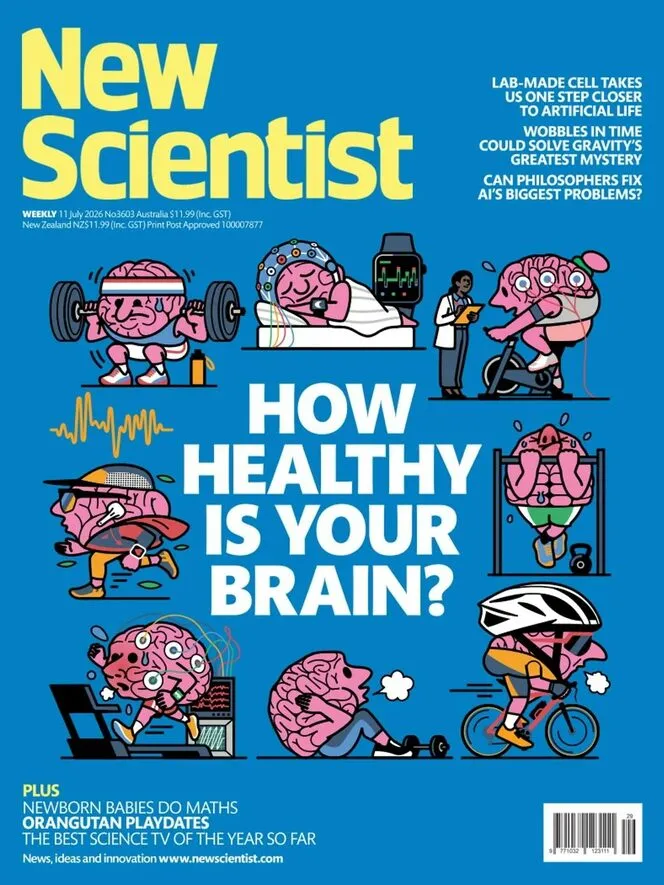
Summary
New Scientist Australian Edition No 3603 (11 July 2026) shares the "How healthy is your brain?" cover with the International Edition and adds an Australian-specific sidebar on the Australian Brain Alliance's 2026 roadmap for brain health research. The issue also covers lab-made artificial life (p.8), time wobbles that could solve gravity's mystery (p.4), and strange metals (p.40).
Content is largely identical to the International Edition. The Australian addition: the Australian Brain Alliance's Global Brain Health Initiative is recruiting 10,000 Australians aged 40-70 for a 10-year longitudinal brain health study, with a focus on modifiable risk factors including diet, exercise, and social engagement.
—————
Content Guide
▸ Cover Story / Neuroscience
p.32 · Your brain check-up — In our efforts to keep our brains healthy, how do we know what is working?
Same as the International Edition. The Australian sidebar adds: the Australian Brain Alliance study will measure cognitive decline using the CogState battery, and initial results are expected in 2028.
p.8 · Lab-made cell takes us one step closer to artificial life
Same as International Edition.
p.4 · Wobbles in time could solve gravity's greatest mystery
Same as International Edition.
▸ Regulars
Same puzzles and back pages as the International Edition.
—————
Editor's Take
The Australian Brain Alliance study recruitment number (10,000) and timeline (2028) are specific, but the sidebar adds only one paragraph of context. The International Edition's brain-check-up cover was strong and the artificial-life piece was well-reported. Best for Australian readers interested in the brain health study.
Strengths
• Australian Brain Alliance: 10,000 participants, 10-year study, 2028 initial results
• Directly relevant to the cover feature's evidence-review approach
Weaknesses
• Minimal Australian content
• Otherwise identical to the International Edition
Verdict: Selective read — Same solid International Edition; the Australian addition is thin.
