
Outdoor Photography Complete Manual – Summer 2026
Summary
Papercut's Outdoor Photography Complete Manual Summer 2026 opens with Choosing the right camera at page 10 and builds through 54 numbered lessons to three outdoor projects at 60, 66 and 72, covering coastal, majestic and urban landscapes.
The Outdoor Photography Complete Manual (Summer 2026) is a manual rather than a monthly, and it runs three sections: Getting Started from 8, Master the Camera Techniques from 20 and Outdoor Projects from 58. The getting started strand covers cameras at 10, lenses at 12, tripods at 14, filters at 16 and digital storage at 18.
The technique section is the bulk of the book, running composition at 22, shooting modes at 24, Jpeg or Raw at 26, aperture at 28, shutter speed at 32, exposure at 36, focal length at 40, focus at 44, hyperfocal distance at 46, exterior lighting at 48, white balance at 50, external flash at 52 and off-camera flash at 54. Projects follow at 60, 66 and 72. For a beginner with a new camera, the value is the order: settings first, then location work.
—————
Content Guide
▸ Getting Started
p.10 · CHOOSING THE RIGHT CAMERA
The manual opens its buying advice at 10, running through what to look for when choosing a camera for outdoor work. The section separates the features that matter outside from the ones that only matter on a spec sheet. Write down the three features you actually need before you read a single review.
p.12 · CHOOSE THE RIGHT LENS
Lens choice follows at 12, matching glass to the kind of outdoor shooting you plan to do. The section covers focal lengths in practical terms rather than numbers alone. Pick one lens for the next month and leave the rest at home.
p.14 · AVOID THE SHAKES WITH A TRIPOD
Tripods get their own page at 14, dealing with camera shake and how a support removes it. The section covers what to look for in legs and a head. Test your tripod in wind before you rely on it, since stability outdoors is the whole point.
p.16 · FILTERS AND FILTER SYSTEMS
Filters and filter systems are covered at 16, explaining what each type does to an outdoor exposure. The section names the filter types and their effects. Buy one filter that solves a problem you actually have, rather than a starter kit.
▸ Master the Camera Techniques
p.22 · BASIC RULES OF COMPOSITION
Basic composition opens the technique section at 22, setting out the rules before the technical settings. The section covers placement and balance. Shoot one subject three ways, moving your position each time, before you settle.
p.28 · UNDERSTANDING HOW APERTURE WORKS
Aperture is explained at 28, covering what the setting does to depth of field in a landscape. The section ties the number to the result in the frame. Set the aperture for the depth you want, then let the camera choose the rest.
p.32 · HOW SHUTTER SPEED AFFECTS YOUR PHOTOS
Shutter speed follows at 32, showing how the setting handles movement in water and wind. The section covers freezing and blurring deliberately. Try one long exposure of moving water this week to see the difference.
p.46 · LANDSCAPES AND HYPERFOCAL DISTANCE
Hyperfocal distance gets a page at 46, dealing with maximising sharpness from front to back in a landscape. The section explains the focus point rather than just the aperture. Focus at the hyperfocal distance instead of on the horizon for your next landscape.
p.48 · MASTERING EXTERIOR LIGHTING CONDITIONS
Exterior lighting is covered at 48, working through what different outdoor light does to a scene. The section names the conditions and the results. Shoot the same view morning and evening, then compare which light suits it.
▸ Outdoor Projects
p.60 · COASTAL AND SEASIDE LANDSCAPES
The first project at 60 covers coastal and seaside landscapes, applying the technique section to a shore setting. The piece walks through the shoot rather than only showing results. Check the tide times before you go, since the tide decides the composition.
p.66 · MAJESTIC LANDSCAPES
Majestic landscapes take the second project at 66, dealing with large views and scale. The piece covers how to give a wide scene a subject. Put something in the foreground, or the view will have no depth.
p.72 · URBAN LANDSCAPES
Urban landscapes close the projects at 72, moving the outdoor method into a city. The piece covers buildings and street-level views. Shoot the city at the hour the light is low, not at midday.
—————
Editor's Take
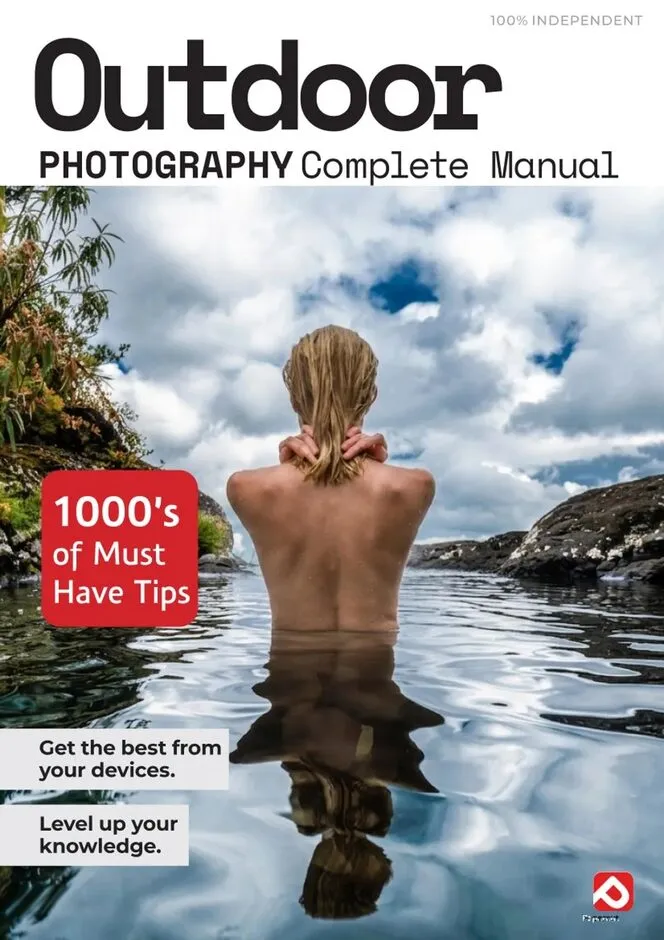
The Outdoor Photography Complete Manual is a settings-first manual and better organised than most: Getting Started at 8 through Master the Camera Techniques at 20 runs aperture at 28, shutter speed at 32, hyperfocal distance at 46 and exterior lighting at 48 in an order that actually teaches, and the three projects at 60, 66 and 72 apply it rather than just displaying pretty pictures. The hyperfocal page at 46 is the single most useful thing here. The weakness is that this is beginner material and the projects run short — three projects is thin for a "complete manual", and there is no depth on post-processing. The cover is serviceable rather than striking, with the usual Summer 2026 dating. Buy this if you have just bought a camera and want to stop using auto; it will do nothing for anyone past the first year.
Strengths
• Technique order actually teaches, settings first
• Hyperfocal distance page solves a real problem
• Projects apply the lessons rather than only showing
Weaknesses
• Only three projects for a "complete manual"
• No depth on post-processing at all
Verdict: Recommended for beginners — Best used as a settings primer; thin on projects and editing.
