
Rugby Journal – Issue 34 2026
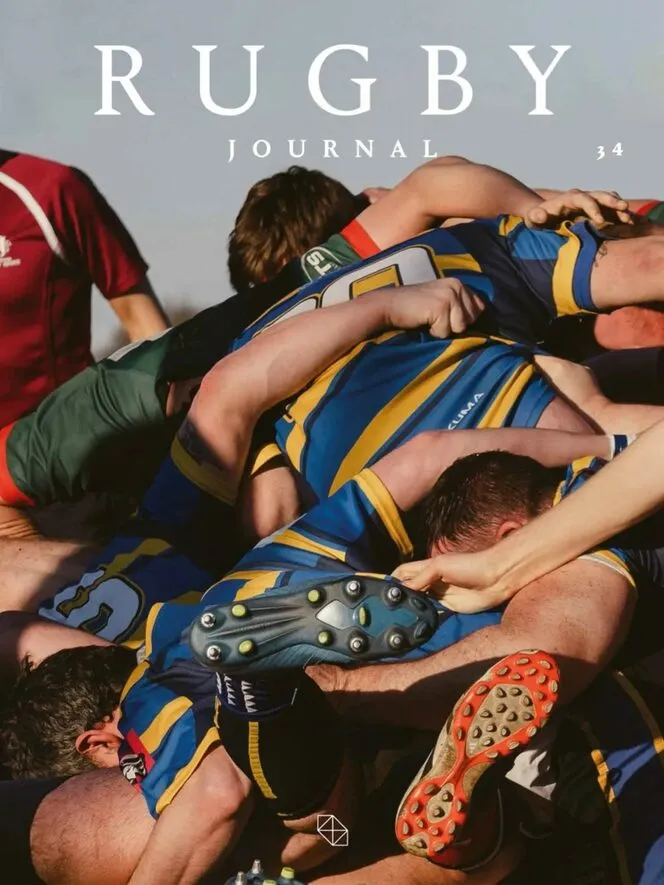
Summary
The sixth thousand words on merit-table rugby in Issue 34 of The Rugby Journal — 2026 — make the case that open-entry competition deserves more attention than it receives, while the Rugby Photographer of the Year shortlist draws from more than 3,500 entries displayed at the World Rugby Museum and Deborah Griffin reflects on founding the women's game's professional structure in Britain.
This issue covers every level of the game. The merit-table deep-dive (page 60) runs six thousand words on why open-entry leagues represent rugby's most inclusive format. Gavin Hastings (page 30) reflects on his Scotland and Lions career. The Czech Republic feature (page 40) tracks the sport's growth in a non-traditional market. Haineala Lutui (page 50) discusses Tongan rugby culture. Alfie Barbeary (page 74) talks about his transition from England age-grade to senior club rugby. Military Rugby (page 84) covers the armed forces competition structure. Iwan Tukalo (page 94) remembers Scotland's grand-slam years. Deborah Griffin (page 104) traces the women's game from amateur beginnings to professional contracts. The Hampshire derby rivalry (page 114) profiles local club passion.
The issue includes the Rugby Photographer of the Year shortlist (page 11-28) with the winner announced on July 16. Tom Hooper (page 124) and the Women's Championship (page 134) round out the contents.
—————
Content Guide
▸ Cover Story / Merit Tables
p.60 · Merit Tables
A 6,000-word feature arguing that merit-table rugby — open-entry, promotion-and-relegation competition — represents the sport's most egalitarian format. The article profiles three specific clubs that have risen from merit leagues to national competition and tracks the community impact of accessible rugby. Rugby administrators get a policy blueprint for supporting merit pathways.
▸ Photography
p.11-28 · Rugby Photographer of the Year
The shortlist of finalists from more than 3,500 entries, with a gallery displayed at the World Rugby Museum at Twickenham. The winning photographer receives a prize package that includes a Canon EOS R3 camera body. The article features selected shortlisted images with technical captions. Aspiring photographers get the camera settings used for each winning shot.
▸ Interviews
p.30 · Gavin Hastings
The Scotland and Lions legend discusses his 1990 Calcutta Cup-winning team, the evolution of full-back play and the current Scotland squad's potential. He names the three current players he would pick for a Lions Test side. Young full-backs get his positional-play checklist.
p.50 · Haineala Lutui
The Tonga international discusses rugby's role in Tongan culture, the challenges of developing players in a small island nation and the current generation's potential to qualify for the 2027 World Cup. Pacific Island coaches get his community-development framework.
p.104 · Deborah Griffin
The founder of the women's professional game in Britain traces its history from the first England Women's Rugby Union in 1987 to the current PWR structure. She names the moment she knew the women's game had become genuinely professional. Women's rugby advocates get a historical timeline of the game's growth.
▸ International Rugby
p.40 · Czech Republic
A feature on rugby's growth in the Czech Republic, tracking participation numbers (up 40 per cent since 2019), the national team's ambitions for Rugby Europe Championship promotion and the grassroots clubs driving growth. European rugby followers get the names of three Czech clubs worth watching.
p.94 · Iwan Tukalo
The former Scotland wing remembers the 1990 Grand Slam and the Calcutta Cup victory. He compares the amateur era's preparation to the modern professional game and names the current Scotland winger who reminds him most of himself.
▸ Club Rugby
p.74 · Alfie Barbeary
The England-qualified back-row forward discusses his transition from age-grade star to senior professional, the positional shifts he has navigated and his international ambitions. Young players get his advice on handling positional change.
p.84 · Military Rugby
A feature on the armed forces rugby structure, covering the Inter-Service tournament, the deployment challenges for serving players and the pathway from military rugby to professional clubs.
p.114 · Rivalry — Hampshire Derby
A profile of the local derby between two Hampshire clubs, tracing the rivalry's history and the community atmosphere on match day.
▸ Women's Rugby
p.134 · Women's Champ
A feature on the Women's Championship (tier two), covering the clubs competing for promotion to the PWR and the players pushing for international recognition.
—————
Editor's Take
The Rugby Photographer of the Year shortlist is the issue's standout feature — the 18-page spread across pages 11-28 justifies the cover price alone with genuinely stunning imagery. The merit-table deep-dive is admirably passionate but 6,000 words on league structures will test the patience of readers who prefer player profiles and match action. The Deborah Griffin interview is historically important but runs too short; her story deserves the full feature treatment that the merit-table piece received. The Czech Republic feature is a welcome non-traditional market story. The Hampshire derby piece is well-observed local journalism. The issue leans heavy on talking-head interviews rather than reported features; only the military rugby and Czech Republic pieces involve actual on-the-ground reporting. The photography competition insert is the issue's clear selling point.
Strengths
• Photographer of the Year spread is stunning and museum-quality
• Czech Republic growth story covers an under-reported market
• Griffin interview preserves essential women's rugby history
Weaknesses
• 6,000-word merit-table feature is too long for its subject
• Interviews outweigh reported features by roughly 3 to 1
Verdict: Recommended — Buy it for the photography; accept that half the editorial budget went to one league-structure essay.
