
The Hollywood Reporter India – July 2026
Summary
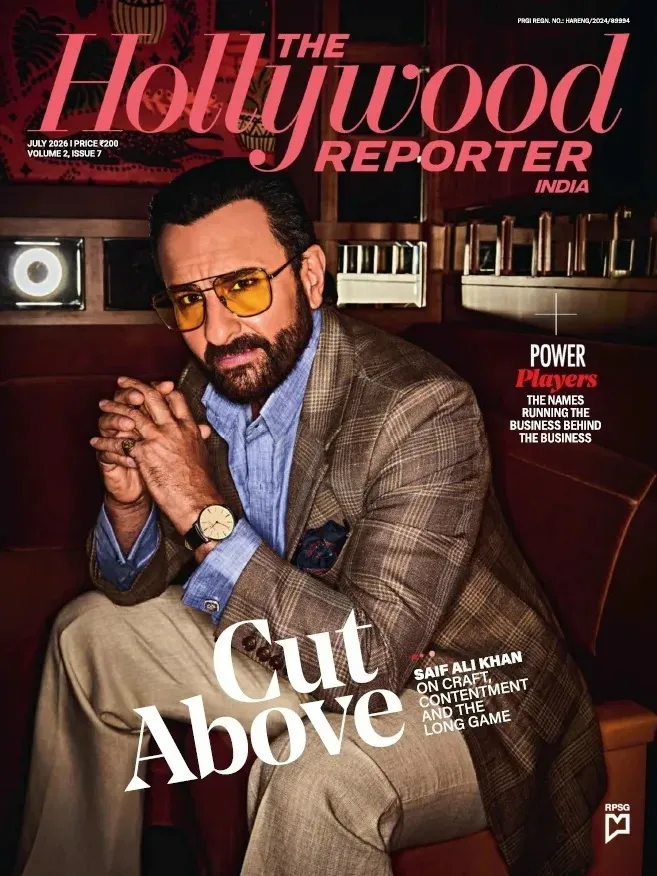
Saif Ali Khan has been an actor for 33 years, and The Hollywood Reporter India July 2026, Volume 2 Issue 7, puts him on the cover for Perfectly Saif, a candid conversation on craft, the wild nineties and what he actually wants now, shot by Arjun Mark in linen from Linen Club Studio.
The issue carries three reporting pieces with numbers attached. Justin Rao's Lens, Lies and Lawlessness documents Mumbai's paparazzi ecosystem being dismantled by untrained operators, Ananya Shankar's The Merch Economy puts a $10-billion fandom economy by 2028 on the record, and Power Players names the managers and PR people running India's entertainment business.
Features lean toward working lives rather than publicity. Randeep Hooda discusses 50 films from Monsoon Wedding to Eetha, Parvathy Thiruvothu talks about the cost of being an actor-activist, Reema Kagti argues indie cinema needs audiences who pay for tickets, and Poorna Jagannathan moves from Lucky aunty to Lanterns.
—————
Content Guide
▸ Cover Story
p.58 area · Perfectly Saif
Saif Ali Khan discusses two milestone films, craft, contentment and the long game, with the editor's letter placing him at 33 years in the industry and naming Kal Ho Naa Ho, Hum Tum, Tanhaji: The Unsung Warrior, Devara: Part 1 and the heartland noir Kartavya. Photographed by Arjun Mark in a pure linen shirt from Linen Club Studio with a ring by Mahesh Notandass Jewellers. The National Award winner speaks about the nineties without softening them. Watch Kartavya before the reunion projects land and the choices he describes make sense.
▸ About Town
p.08 · 50 Films, No Formula
From Monsoon Wedding to Eetha, Randeep Hooda has never played it safe or simple. The profile covers five decades of work through a career built on refusing type rather than finding one. Hooda's own reasoning about risk runs through it. Actors deciding between a safe franchise and an odd part should read this first.
p.20 · Old Label, New Energy
With a London debut and a global menswear launch, Aseem Kapoor's Satya Paul is playing a longer, quieter game. The piece treats a heritage label as a live business rather than a nostalgia property. London and the menswear launch give it a concrete frame. Check what Satya Paul actually shows in London before assuming heritage brands only trade on archive prints.
▸ The Report
p.24 · Lens, Lies and Lawlessness
Justin Rao reports that Mumbai's paparazzi ecosystem was built by the old guard and is now being dismantled, flooded by untrained operators and governed by nobody. The piece names the city and the mechanism rather than generalising about celebrity culture. It is the issue's strongest reported story. Anyone booking a public appearance in Mumbai should read it before signing off on a photographer list.
p.36 · The Merch Economy
Ananya Shankar reports that merchandise is no longer an afterthought for artists and entertainment brands, with industry insiders betting on a $10-billion fandom economy by 2028. The forecast gives the piece a testable claim rather than a vague trend line. Loyalty and relevance are framed as measurable. Price your own next merch run against that figure before dismissing it as side income.
p.58 · Power Players
The list names the most influential power players in India's entertainment ecosystem, explicitly including managers and PR professionals. Including the people behind the deals rather than only the faces makes it more useful than a celebrity ranking. It works as a directory of who actually moves projects. Note the managers named here before your next pitch meeting.
▸ Features
p.110 · In it to Win it
Parvathy Thiruvothu is still choosing principle over popularity, and she discusses the cost of being an actor-activist and why the fight is not over. Her account is specific about what speaking out has cost her professionally. The piece avoids treating activism as a publicity phase. Read it before forming a view on her recent project choices.
p.122 · Circuit Breaker
Pritam and Pedro reunite Bollywood's most reliably unreliable improviser with the only storyteller who seems to know how to use him. The pairing is described in terms of how the collaboration actually works rather than as a reunion announcement. It is the most specific music-industry piece in the issue. Listen to their earlier scores back to back and the working method is audible.
p.128 · The Patronage Pitch
Director and screenwriter Reema Kagti argues that indie cinema needs audiences who show up, pay attention and pay for tickets. She puts the responsibility on viewers rather than only on funding bodies. The argument is blunt, which makes it useful. Buy a ticket to one independent release this month rather than streaming it later.
p.134 · Once Upon a Time
At her first Royal Ascot, Sara Ali Khan found glamour, cheese boards and a brush with royalty. The piece is lighter than the rest of the issue but specific about place and occasion. It closes the features on a change of tone. Use it as a palate cleanser after Parvathy's interview.
▸ THR Insider
p.124 · Lucky Stikes
From Lucky aunty to Lanterns, Poorna Jagannathan has never played it safe and is not about to start. The two projects named span very different scales, which lets the piece talk about range rather than just momentum. Her account of choosing roles is the practical core. Watch both and judge whether the risk paid off.
—————
Editor's Take
The reporting, not the celebrities, is what makes this issue worth the ₹200. Justin Rao's Lens, Lies and Lawlessness names Mumbai's paparazzi ecosystem as a structure being dismantled by untrained operators with nobody governing them, Ananya Shankar attaches a $10-billion by 2028 figure to the merch economy, and Power Players does the unusual thing of listing managers and PR professionals as the actual power. Randeep Hooda on 50 films and Parvathy Thiruvothu on the cost of being an actor-activist are both interviews with something at stake. The weakness is the cover. Saif Ali Khan is promised as Perfectly Saif and the substance is largely in the editor's letter rather than a clearly paginated feature, so the strongest material sits in The Report. Best for industry readers working in the Indian market.
Strengths
• Mumbai paparazzi piece names the city, the old guard and the untrained operators dismantling it
• $10-billion by 2028 fandom figure gives the merch piece a testable claim
• Power Players lists managers and PR professionals rather than only on-screen talent
Weaknesses
• Cover story's substance sits mainly in the editor's letter, not a clearly paginated feature
• Once Upon a Time at Royal Ascot is filler against the reporting around it
Verdict: Recommended — buy it for Lens, Lies and Lawlessness, The Merch Economy and Parvathy's interview.
