
The Times Literary Supplement – 4 September 2026
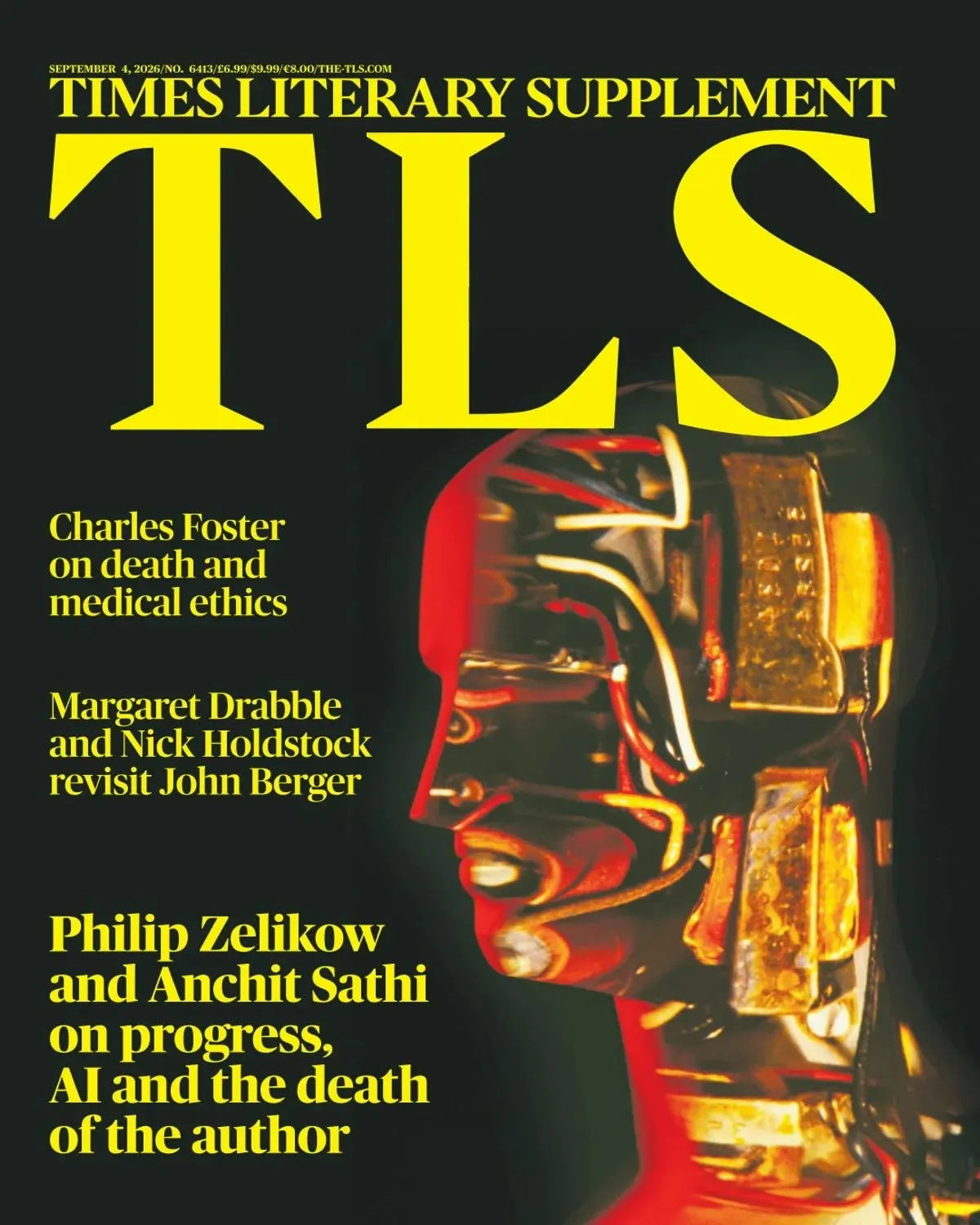
Summary
Andrew Herring's The Undiscovered Country — a father's account of his son Laurie's death under controversial life-support withdrawal — leads The Times Literary Supplement September 4 2026, Number 6413. The cover price is 6.99 pounds for the 48-page issue that confronts end-of-life medical ethics through a personal narrative.
The department structure runs across social studies, literature, memoirs, cultural history, Italian biography, classics, politics, arts, fiction, history, French history, film, dance, philosophy, Middle East studies, natural history, in brief, and afterthoughts. Philip Zelikow contributes a politics piece on AI and the crisis of the author. Margaret Drabble reviews John Berger's collected writings. The fiction section includes Robert Harris's Agrippa, Sebastian Barry's The Newer World, Sebastian Faulks, and Kate Atkinson.
Content Guide
▸ Social Studies / Medicine
p.3 · A Matter of Life and Death — Charles Foster on The Undiscovered Country
Foster reviews Andrew Herring's account of his son Laurie's death. The book critiques the UK's life-support withdrawal framework and the role of private healthcare assessors. Foster argues that the case exposes a systematic bias toward withdrawal in NHS cost-pressure environments. The book lists 3 alternative legal pathways families can request before a withdrawal decision.
p.16 · How Progress Ends — Philip Zelikow on AI
Zelikow reviews Carl Benedikt Frey's book arguing that AI progress does not guarantee human flourishing. The review cites Frey's data showing that AI investment returns are concentrated in 5 U.S. companies. Zelikow warns that literary culture faces an existential threat from machine-generated content.
▸ Literature / Arts
p.8 · John Berger — Margaret Drabble
Drabble reviews a new collection of Berger's writings edited by Tom Overton. She traces Berger's evolution from Marxist art critic to rural essayist. The collection includes Berger's 1972 essay on Francis Bacon that Drabble calls still definitive.
p.18 · AI and the Crisis of the Author
Anchit Sathi writes on whether literary culture can survive machine intelligence. He notes that 3,000 AI-generated books were published on Amazon in 2025 alone. Sathi argues that human authorship is defined by intent, not output.
p.22 · Beyond Bedlam — Royal Academy Exhibition
Elizabeth Lowry reviews the RA's exhibition on mental health representation in art. The show runs 200 works from the 16th century to the present. Lowry praises the contemporary section for including patient-created art from Bethlem Hospital.
▸ Fiction
p.26 · Agrippa — Robert Harris
Barbara Graziosi reviews Harris's novel about the Roman general. She notes that Agrippa has been the subject of only 3 English-language biographies in the last 50 years. Harris imagines his subject through surviving letters to Augustus.
p.26 · The Newer World — Sebastian Barry
Alice Jolly reviews Barry's post-apocalyptic novel set in a flooded Ireland. The novel follows a mother and daughter rowing through the remains of Dublin. Jolly says the prose carries the premise further than the plot.
▸ History / Philosophy
p.30 · The Renoir Girls — Catherine Ostler
Catriona Seth reviews a group biography of Renoir's 3 sons, all artists. The middle son Jean became the filmmaker. The book uses family letters from the Musee d'Orsay archives.
p.38 · Being and Time — Martin Heidegger — New Translation
Ian Cooper reviews the first complete English translation of Heidegger's Being and Time by Cyril Welch. Cooper argues the new translation corrects a 1962 error in the Macquarrie-Robinson version concerning the term Dasein. The corrected passage appears on page 42 of the new edition.
Editor's Take
The Herring book review gives Number 6413 a moral weight that most TLS issues do not carry — a father's grief, a systemic critique of NHS withdrawal protocols, three specific legal alternatives. That alone is worth the cover price. The AI-and-authorship pieces (Zelikow and Sathi) are timely but cover ground already well-trodden in the TLS in 2025. The fiction section is stronger than the previous issue's — the Harris and Barry novels both receive serious treatment. The Heidegger translation review is niche but the specific correction (page 42, Dasein error) gives it journalistic value. The letters page this week is mercifully short.
Strengths
• Herring The Undiscovered Country review with 3 actionable legal pathways
• Zelikow AI review with 5-company concentration data
• Heidegger translation correction: page 42, Dasein error corrected
Weaknesses
• AI authorship pieces repeat arguments from 2025 issues
• No dance coverage beyond the Khitrova review
Verdict: Recommended — The Herring review makes this a standout issue for medical-ethics readers.
