
Health Vitality – Fight Inflammation, 2026
Summary
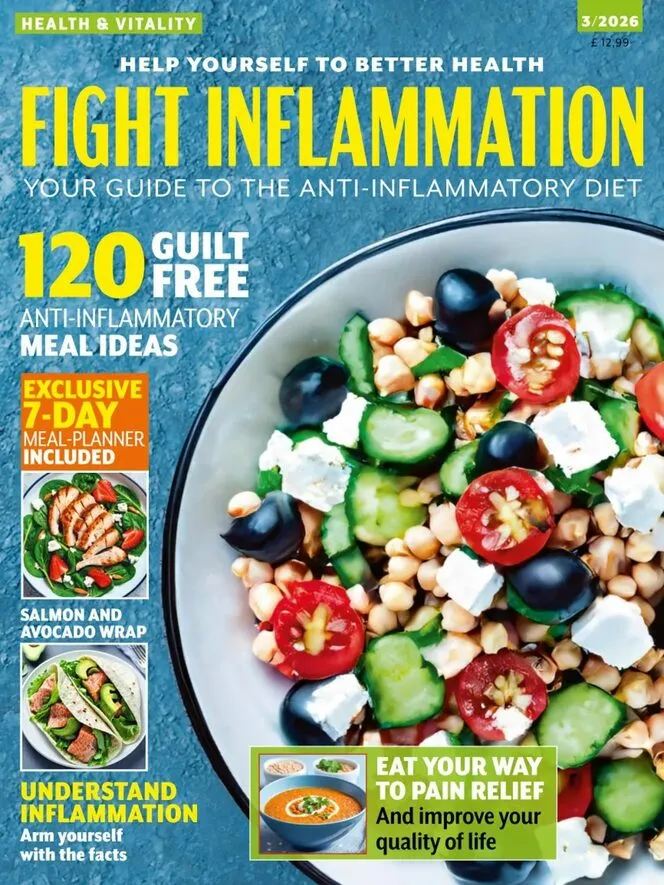
Health & Vitality Issue 3/2026 (£12.99) delivers "Help Yourself to Better Health — Fight Inflammation," a 126-page guide combining inflammation science with 120 anti-inflammatory recipes across 10 categories. The issue explains what inflammation is at the cellular level, maps cause-and-effect pathways from diet to systemic inflammation, profiles real-world success stories and provides a 7-day meal planner designed for pain relief and quality-of-life improvement. Exclusive 7-day meal planner included with portion-controlled, calorie-counted recipes.
The science section (p.6-22) breaks down the difference between acute and chronic inflammation, explaining how poor diet, lack of exercise, chronic stress and inadequate sleep disrupt immune balance and lead to chronic low-grade inflammation linked to cardiovascular disease, type 2 diabetes, obesity and mental health decline. The anti-inflammatory journey (p.24-36) introduces the anti-inflammatory diet, distinguishes beneficial from harmful foods with a stop-and-go traffic-light system and shares before-and-after success stories from readers who reduced joint pain through dietary changes alone.
The recipe section spans 84 pages across 10 categories: breakfasts, lunches, soups, dinners, desserts, snacks, salads, sides, sauces and a comprehensive food list with anti-inflammatory potency rankings per ingredient. The 7-day meal planner combines recipes into daily calendars with preparation time estimates and shopping lists.
—————
Content Guide
▸ Understanding Inflammation
p.6 · What Is Inflammation?
A cellular-level explanation of the immune response, distinguishing acute inflammation (the beneficial, short-term healing response) from chronic inflammation (the persistent, tissue-damaging state). Chronic inflammation develops when the immune system remains activated due to ongoing triggers: poor diet, environmental toxins, chronic stress, insufficient sleep or autoimmune conditions. Key marker: C-reactive protein (CRP) above 3mg/L indicates chronic inflammation requiring lifestyle and dietary intervention.
p.14 · Cause and Effect
A visual cause-and-effect map tracing how modern lifestyle factors — ultra-processed foods, sedentary behaviour, sleep disruption, environmental toxins and chronic stress — each trigger inflammatory pathways. Understanding your specific triggers requires a 2-week food-and-symptom journal, tracking joint pain, digestive discomfort, skin changes and energy levels after each meal.
▸ Your Anti-Inflammatory Journey
p.24 · Introducing the Anti-Inflammatory Diet
The core dietary framework: prioritise omega-3-rich foods (fatty fish, flaxseed, walnuts), monounsaturated fats (olive oil, avocado), antioxidant-dense vegetables (leafy greens, cruciferous vegetables, berries) and prebiotic fibres (onions, garlic, leeks, asparagus). The plate model: fill half with vegetables, one quarter with protein and one quarter with whole grains or starchy vegetables. Drizzle with extra-virgin olive oil after cooking.
p.30 · Good Food v Bad Food
A traffic-light system: green foods are anti-inflammatory powerhouses (berries, turmeric, ginger, green tea, fatty fish, olive oil); amber foods are neutral but portion-controlled (whole grains, lean meats, legumes); red foods are pro-inflammatory triggers (refined sugar, industrial seed oils, processed meats, alcohol, trans fats). Eliminate red-category foods for a 30-day challenge, then reintroduce one at a time while tracking symptoms.
p.34 · Success Stories
Real readers share their anti-inflammatory diet transformations, including measurable reductions in joint pain scores, medication dosage reductions and improved mobility. One profile documents a 40% reduction in morning stiffness after six weeks on the meal plan.
▸ Recipes
p.38 · Breakfasts
20 anti-inflammatory breakfast recipes including berry-and-spinach smoothie bowls, turmeric scrambled eggs with smoked salmon, overnight chia with almond milk and berry compote. Each recipe includes calorie count, protein grammage and anti-inflammatory ingredient highlights.
p.72 · Dinners
30 dinner recipes designed around the anti-inflammatory plate model: baked salmon with turmeric cauliflower rice, lemongrass chicken with bok choy, lamb tagine with saffron and vegetables, and a complete chickpea-and-sweet-potato curry. Each dinner provides 400-550 calories with 30-40g protein and a minimum of 3 servings of vegetables.
p.90 · Desserts
10 anti-inflammatory desserts that eliminate refined sugar while maintaining palatability: dark chocolate avocado mousse, baked cinnamon apples, coconut-mango chia pudding and turmeric-spiced poached pears. Use whole fruit as a sweetener and add cinnamon or vanilla for flavour without sugar.
p.122 · Food List
A comprehensive A-Z of anti-inflammatory foods ranked by polyphenol content, omega-3 density and antioxidant capacity. The list includes serving size recommendations and preparation tips for 80-plus ingredients.
p.126 · 7-Day Meal Planner
A complete weekly calendar with three meals plus two snacks per day, designed to provide 1,600-1,800 calories with 80-100g daily protein. The planner includes a single shopping list for the entire week and estimated total preparation time of 2 hours for batch prep.
—————
Editor's Take
This Health & Vitality issue commits fully to its anti-inflammatory thesis across both science and recipe sections, and that single-minded focus is its greatest strength — no scattered content, no lifestyle filler. The 84-page recipe section is the practical core, with each recipe including specific anti-inflammatory ingredient call-outs that educate as you cook. The weakness is the science section, which over-simplifies the inflammation pathway to the point of losing nuance — not all chronic inflammation responds to diet (autoimmune-driven inflammation often requires medication first), and the issue does not flag this distinction clearly enough. This guide suits anyone with diagnosed inflammatory conditions — arthritis, eczema, IBS — who wants a structured dietary protocol backed by meal-by-meal instructions they can start on Monday morning.
Strengths
• 84 pages of recipes with anti-inflammatory ingredient call-outs on every page
• Traffic-light food system is simple enough to apply without the magazine open
• 7-day meal planner with single shopping list reduces the start-up friction
Weaknesses
• Science section glosses over the distinction between diet-responsive and medication-required inflammation
• No guidance for readers who need to combine anti-inflammatory diet with existing medication protocols
Verdict: Recommended — A well-executed recipe-heavy anti-inflammatory guide that works best as a practical cookbook rather than a complete medical reference.
