
History of Halloween – 5th Edition – 6 August 2026
Summary
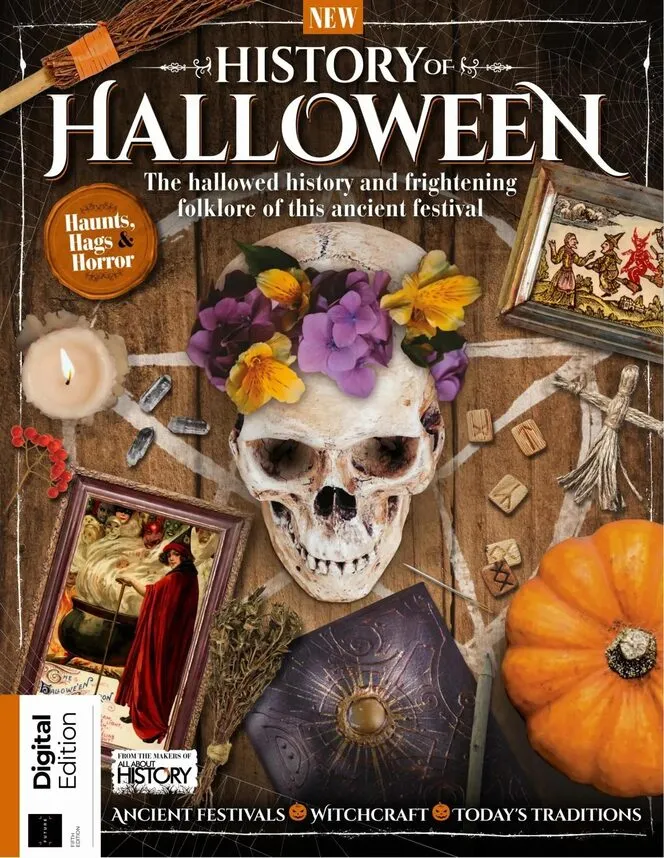
Samhain the threshold when the veil between worlds thins gave birth to traditions that became modern Halloween. History of Halloween 5th Edition 6 August 2026 explores the festival from its Celtic roots through witch trials and into today's carved pumpkins and trick-or-treating.
The edition splits into three sections: The History The Witches and The Traditions. The first section traces Spooky Season the Ancient Witch Religion the Religion of the Cells and Samhain itself followed by Ghostly Goings On and The Season of Hallowtide. The Witches section opens with Why Witches Come Out on Halloween then moves through Dawn of the Witch to profiles of the 15 Most Notorious Witches. The Pendle Hill terror and James VI's witch hunts anchor the early modern period. Gerald Gardner's genesis of Wicca brings the story into the 20th century. The Traditions section covers trick-or-treating pumpkin carving apple bobbing Halloween costumes haunted houses and modern Halloween celebrations.
—————
Content Guide
▸ The History
p.10 · Spooky Season
The origins of the season are traced to the Celtic festival of Samhain marking the end of the harvest and the beginning of winter. The article explains why 31 October was considered a liminal moment when spirits could cross into the living world. The specific rituals performed by Celtic priests are described.
p.14 · The Ancient Witch Religion
Pre-Christian pagan practices that later became labelled as witchcraft are examined. The article draws on archaeological evidence from across Europe. The role of female spiritual leaders in ancient communities is documented.
p.24 · Samhain
The centrepiece of the Celtic calendar is explored in depth. The article names the specific bonfire rituals and the livestock sacrificed. The tradition of wearing costumes to confuse wandering spirits is identified as the direct ancestor of modern Halloween dress.
▸ The Witches
p.40 · Dawn of the Witch
The transition from folk healer to feared witch in European consciousness is charted. The piece identifies the key legal changes that made witchcraft a capital offence. The Malleus Maleficarum is named as the text that codified witch-hunting doctrine.
p.50 · 15 Most Notorious Witches
Profiles of history's most famous accused witches from the Pendle witches to the Salem accused. Each entry gives the location year and outcome of the trial. The common patterns in the accusations are analysed.
p.58 · James VI and the Witches
The Scottish king's personal obsession with witchcraft shaped the law across Britain. The article details James's 1597 book Daemonologie and his role in the North Berwick witch trials. The specific torture methods authorised under his reign are documented.
p.72 · Terror on Pendle Hill
The most famous English witch trial is reconstructed. The article names the 12 accused including the Demdike and Chattox families. The specific testimony that sent them to the gallows in 1612 is quoted.
p.88 · Gardner's Genesis of Wicca
Gerald Gardner published Witchcraft Today in 1954 and created the modern Wiccan religion. The article traces his sources including ceremonial magic and folk traditions. Gardner's Book of Shadows is identified as Wicca's foundational text.
▸ The Traditions
p.96 · Trick or Treat
The American custom that became a global phenomenon is traced to early 20th-century North America. The article identifies the first recorded use of the phrase trick or treat in 1927 Alberta Canada. The post-war suburbanisation that spread the practice across the US is explained.
p.100 · Carving Pumpkins
The Irish tradition of carving turnips became the pumpkin jack-o-lantern in America. The article explains why pumpkins replaced turnips and names the specific varieties best suited for carving. The original legend of Stingy Jack is recounted.
p.120 · Scary Stories to Tell in the Dark
The tradition of oral ghost stories around Halloween is examined. The article traces the practice from medieval warning tales to modern campfire storytelling. Specific classic ghost stories and their regional variants are named.
p.124 · Modern Halloween
How a pagan festival became a $10 billion commercial industry in the US alone. The article breaks down spending categories: costumes candy decorations and greeting cards. The global spread of Halloween traditions is mapped by country.
—————
Editor's Take
The 5th Edition delivers outstanding breadth from Celtic roots to modern commerce and the three-section structure makes it easy to navigate. The 15 Most Notorious Witches profile list is the standout reference feature providing quick-access historical data. The weakest section is the Modern Halloween closing chapter which reads as a statistics summary rather than a cultural analysis. This title suits the seasonal reader and the folklore enthusiast equally well.
Strengths
• Three-part structure covers history witchcraft and modern traditions comprehensively
• 15 Most Notorious Witches list is a valuable quick-reference feature
• Samhain and Celtic origins section is well-researched
Weaknesses
• Modern Halloween chapter relies too heavily on spending statistics
• Some spellings in the index reflect OCR errors
Verdict: Recommended — the most complete single-volume Halloween reference available in this series.
