
New Scientist Australian Edition – 18 July 2026
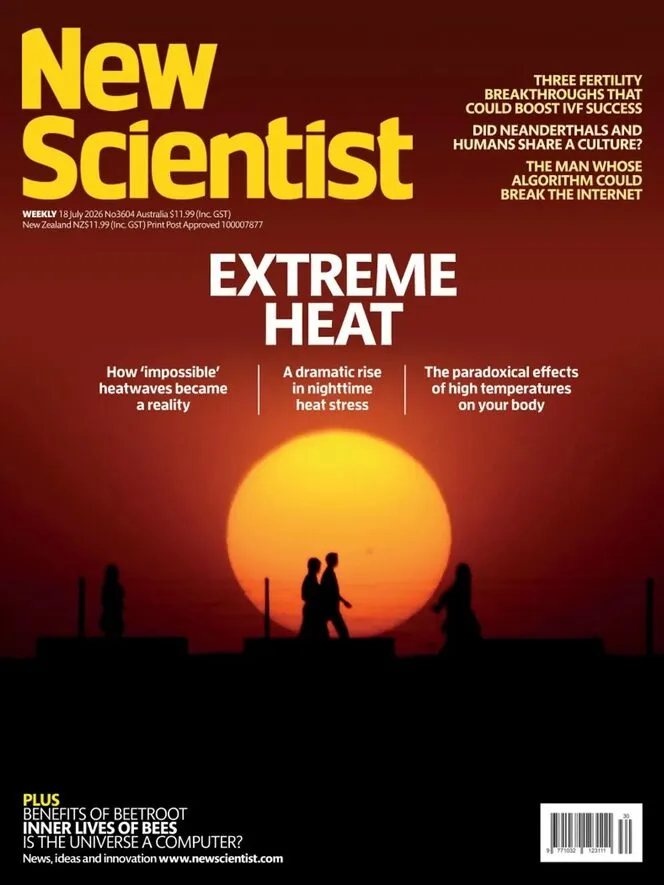
Summary
New Scientist Australian Edition No 3604 (18 July 2026) shares the "Extreme heat" cover with the International Edition—reporting on how impossible heatwaves became a reality and the paradoxical effects of high temperatures on the body—and adds an Australian context sidebar on the 2025-26 summer that produced 22 consecutive days above 40 degrees Celsius in Perth. The issue also covers three fertility breakthroughs (p.6), Neanderthal-human cultural sharing (p.14), and whether the universe is a computer (p.40).
Content is largely identical to the International Edition. The Australian addition: a sidebar on the 2025-26 Perth heatwave, where overnight minimums stayed above 28 degrees Celsius for 12 consecutive nights.
—————
Content Guide
▸ Cover Story / Climate & Health
p.26 · Benefits of heat — Sauna and hot baths can aid our heart and brain health
Same as the International Edition. The Australian sidebar adds: during the 12-night Perth heatwave, emergency department visits for heat-related conditions rose by 180 percent compared with the same period in the previous summer.
p.6 · Three fertility breakthroughs that could boost IVF success
Same as International Edition.
p.14 · Did Neanderthals and humans share a culture?
Same as International Edition.
▸ Regulars
Same puzzles and back pages as the International Edition.
—————
Editor's Take
The Perth heatwave data (22 days above 40 degrees C, 12 consecutive nights above 28 degrees C, 180 percent increase in ED visits) adds a compelling local frame to the extreme heat cover story. The Australian edition earns its place with this addition. The rest of the content is identical to the International Edition. Best for Australian readers facing another extreme summer.
Strengths
• Perth heatwave data: 22 days above 40 degrees C, 180 percent ED visit increase
• Directly relevant to Australian readers
Weaknesses
• Only one Australian-specific sidebar
• Otherwise identical to the International Edition
Verdict: Recommended — The heat coverage is strong; the Perth data makes it locally essential.
