
Australian Geographic – September-October 2026
Summary
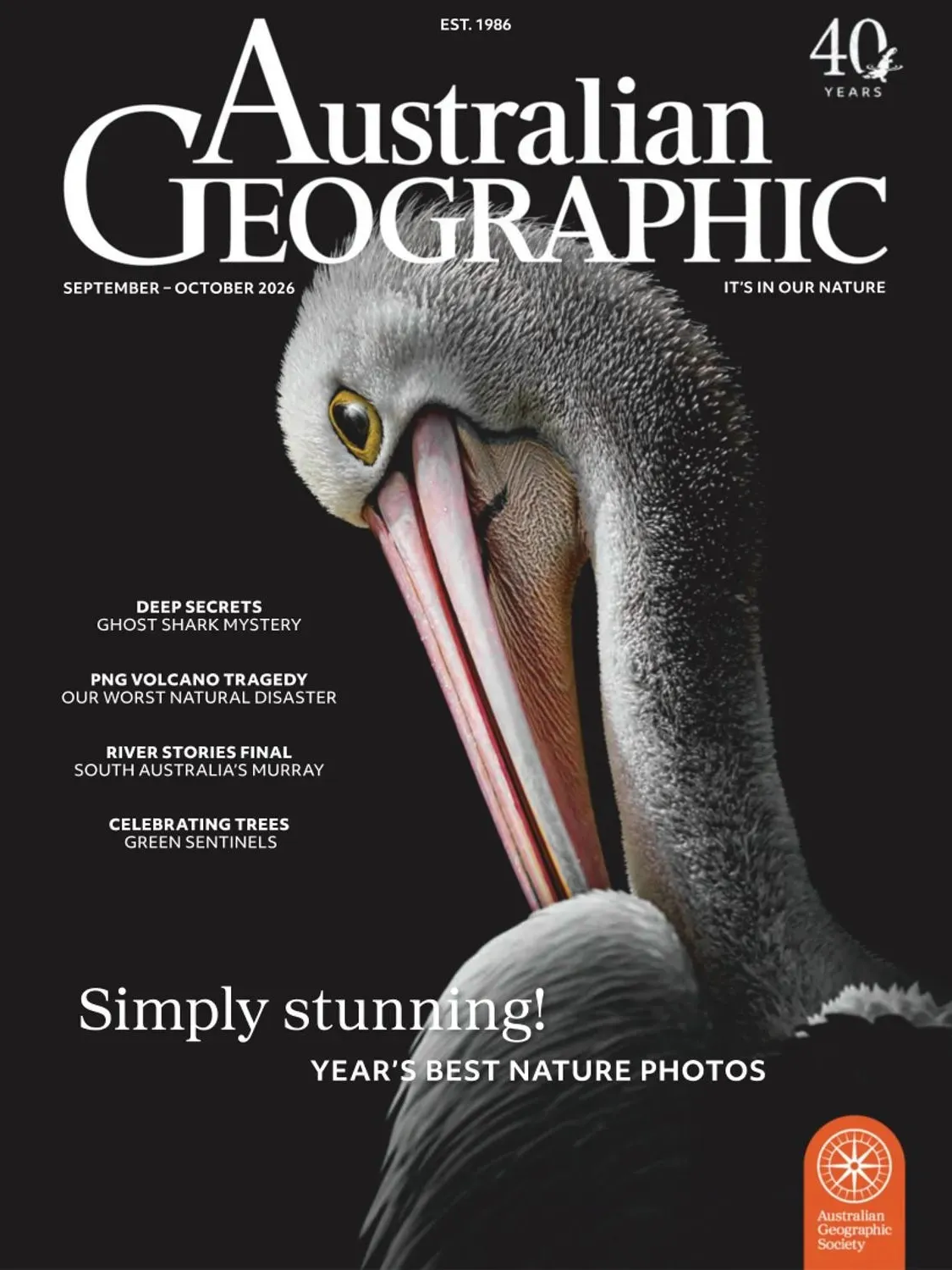
An Australian pelican photographed by 17-year-old Aaryan Dhakal won the Junior category of the Australian Geographic Nature Photographer of the Year 2026 competition and adorns the cover of Issue 194. Australian Geographic September-October 2026 leads with this image then investigates ghost species sugar industry strife and the devastating impact of mining in Papua New Guinea.
The issue opens with Once Upon a Time in Australia followed by Chasing Ghosts which investigates species thought extinct that may still survive. Sugar and Strife examines the environmental and health costs of the sugar industry. Devastation in PNG covers the human and environmental cost of mining. Deep Roots explores the connection between Indigenous Australians and the land. For Peat's Sake investigates the importance of peatlands. The Nature Photographer of the Year 2026 winners are showcased across multiple pages. How to Save a River profiles conservation efforts for Australian waterways. Regular columns include Dr Karl on T-rex arms Tim the Yowie Man on a runaway convict and Australia's Most Endangered on the manta ray.
—————
Content Guide
▸ Features
p.36 · Once Upon a Time in Australia
The opening feature sets the theme of the issue. The article traces the deep history of the Australian continent.
p.40 · Chasing Ghosts
Investigating species thought extinct that may still survive in remote Australian habitats. The article names specific species including the night parrot and the Tasmanian tiger. The survey methods used by researchers are described.
p.46 · Sugar and Strife
The environmental and health costs of the Australian sugar industry are examined. The article identifies the specific regions where sugar farming impacts the Great Barrier Reef. The economic arguments for and against industry reform are presented.
p.52 · Devastation in PNG
The human and environmental cost of mining in Papua New Guinea is documented. The article names the specific mine sites and the communities affected. The long-term environmental damage is assessed.
p.58 · Deep Roots
The connection between Indigenous Australians and the land is explored. The article names specific communities and their traditional practices. The conservation benefits of Indigenous land management are documented.
p.66 · For Peat's Sake
The importance of Australian peatlands is investigated. The article identifies the specific peatland ecosystems under threat. The carbon storage value of peat is quantified.
p.74 · Australian Geographic Nature Photographer of the Year 2026
The winning and shortlisted images are showcased. The winners in each category are named. Aaryan Dhakal's pelican photograph is featured as the junior winner.
p.86 · How to Save a River
Conservation efforts for Australian waterways are profiled. The article names specific rivers and the threats they face from agriculture and development. The restoration techniques that have shown results are described.
▸ Regulars
p.18 · Dr Karl Why Did T.rex Have Silly Little Arms
The science communicator answers a reader question about dinosaur anatomy. The specific theories about T-rex arm function are presented.
p.20 · Tim the Yowie Man Runaway Convict
The folklore and history of a convict who escaped into the Australian bush. The historical records that support the story are cited.
p.22 · Australia's Most Endangered Manta Ray
A profile of the manta ray and the threats it faces in Australian waters. The specific conservation measures needed are identified.
—————
Editor's Take
Issue 194 delivers the environmental journalism that Australian Geographic does best with the sugar industry and PNG mining features carrying the most weight. The Chasing Ghosts piece on possibly-extinct species is the issue's most compelling narrative. The Nature Photographer of the Year showcase is visually impressive but consumes pages that could have been used for additional feature depth. This issue suits the environmental reader and the photography enthusiast equally.
Strengths
• Sugar industry investigation links farming impact to reef health
• Chasing Ghosts on possibly-extinct species is compelling narrative science
• Nature Photographer of the Year junior winner story adds human interest
Weaknesses
• Photography competition pages reduce space for feature depth
• Once Upon a Time feature is too vague to add value
Verdict: Recommended — strong environmental reporting offset by photography padding.
