
Bring History to Life Collections – Air War WW2, 2026
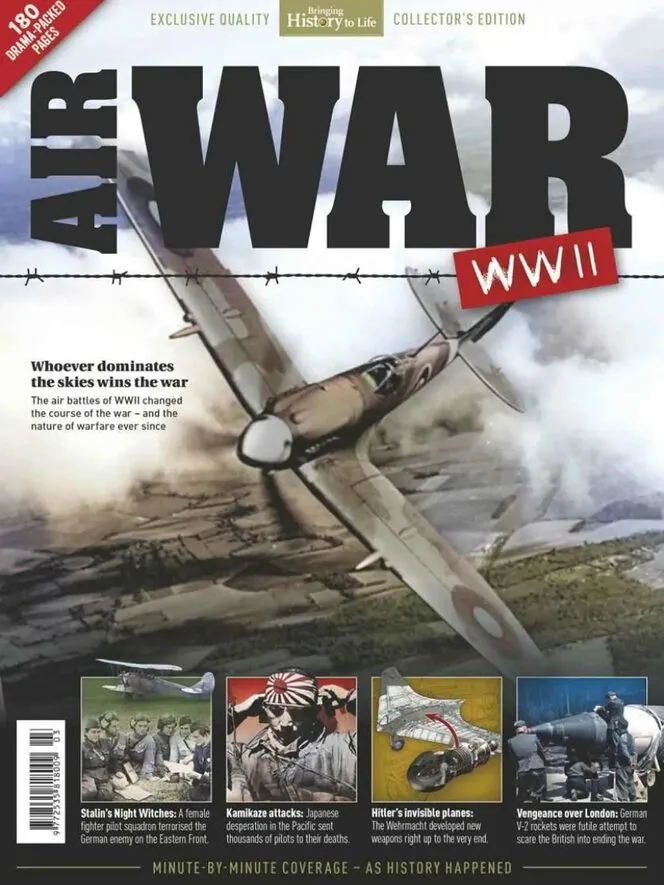
Summary
The German Luftwaffe went from blitzkrieg supremacy in 1939 to near-total destruction by 1945 and Bring History to Life Collections Air War WW2 2026 traces every stage of that collapse. The volume covers the Battle of Britain where the Luftwaffe lost around 2,000 aircraft and more than 3,000 men through to the Messerschmitt Me 262 the world's first fighter jet arriving too late.
The story opens with the Luftwaffe's formal creation on 15 May 1933 under Hermann Goering. The Spanish Civil War saw new tactics including bombing of civilian populations and Guernica was flattened. By 1939 Germany had the most modern air force with over 7,000 aircraft. The Battle of Britain is covered as Hitler's first serious defeat. The Eastern Front saw JG 52 become the most successful fighter wing of the war using the Finger-four formation. The Luftwaffe played a key role in the attack on the Soviet Union with over 4,000 aircraft supporting the invasion. Soviet female pilots in wood and canvas planes spread terror behind German lines. The strategy shifted to defence of the Third Reich by 1943. The Me 262 jet fighter entered service in 1944. By January 1945 Operation Bodenplatte failed to regain air supremacy and the Luftwaffe effectively ceased to exist.
—————
Content Guide
▸ Pre-War and Early War
p.06 · The Birth of the Luftwaffe
Hitler ordered the creation of a German air force shortly after seizing power. The Luftwaffe was formally formed on 15 May 1933 with World War I fighter pilot Hermann Goering as its commander. The secret training programmes in the Soviet Union that preceded the official formation are documented.
p.10 · Testing in Spain
The Spanish Civil War became a testing ground for new aircraft types and tactics. Guernica was flattened by German bombers in 1937. The specific aircraft types tested are named including the Ju 87 Stuka.
p.14 · 1939 The Most Modern Air Force
At the start of the war Germany had the most modern air force in the world with over 7,000 aircraft. The article names the front-line types: Bf 109 He 111 Do 17 and Ju 88. The blitzkrieg tactics that integrated air and ground forces are explained.
▸ The Battle of Britain
p.20 · Victory Turns to Defeat
The Battle of Britain was both Hitler's and the Luftwaffe's first serious defeat. The autumn clashes cost around 2,000 aircraft and more than 3,000 men. The specific German tactical errors that turned the battle are identified. The limited range of the Bf 109 is cited as a key factor.
p.28 · Masters of the Air
The article describes the iconic sight of Spitfires roaring past Beachy Head. The Battle of Britain narrative is told through the German perspective. The shift to night bombing is explained.
▸ Eastern Front
p.34 · JG 52 The Most Successful Fighter Wing
The wing's tactics were far ahead using the Finger-four formation. The pilots flew far more missions than Allied pilots continuing until captured or killed. By autumn 1944 Stalin's troops pushed the Germans back. The postwar debate over JG 52's kill rates and Soviet archives that confirmed them is documented.
p.42 · Operation Barbarossa
The Luftwaffe played a key role with over 4,000 aircraft supporting the invasion. The article identifies the specific air fleets committed. The initial air superiority achieved by the Luftwaffe is quantified.
p.48 · The Night Witches
Soviet female pilots in primitive wood and canvas planes sneaked through German lines spreading bombs and terror. The article identifies the 588th Night Bomber Regiment. The specific aircraft type the Polikarpov Po-2 is described.
▸ Late War
p.54 · Defence of the Reich
The strategy shifted from attack to defence of the Third Reich by 1943. The number of skilled Luftwaffe pilots fell. The Allied bombing campaign is described from the German defensive perspective.
p.60 · The Me 262 Jet Fighter
The Luftwaffe was strengthened with the world's first fighter jet in 1944. The article describes the Me 262's performance advantages. The production delays and Hitler's interference that limited its impact are documented.
p.66 · The End of the Luftwaffe
After unsuccessfully attempting to regain air supremacy in January 1945 the Luftwaffe effectively ceased to exist as a combat unit. The article describes Operation Bodenplatte and the final collapse.
—————
Editor's Take
Air War WW2 delivers the most focused narrative of the Bringing History to Life series covering a single service arm through the entire war. The JG 52 section with the Finger-four formation detail and the Soviet archives confirmation of kill rates is the strongest chapter. The Night Witches section gives the volume a human and gender dimension. The simplified presentation again suits the younger target audience. This title works best for readers new to WWII aviation history.
Strengths
• Single-service focus gives the volume a clear narrative arc
• JG 52 coverage with Finger-four formation and kill-rate debate
• Night Witches feature adds a distinctive human angle
Weaknesses
• Simplified presentation for younger readers
• No coverage of the strategic bombing campaign from the Allied perspective
Verdict: Selective read — good entry-level Luftwaffe history for new readers.
